
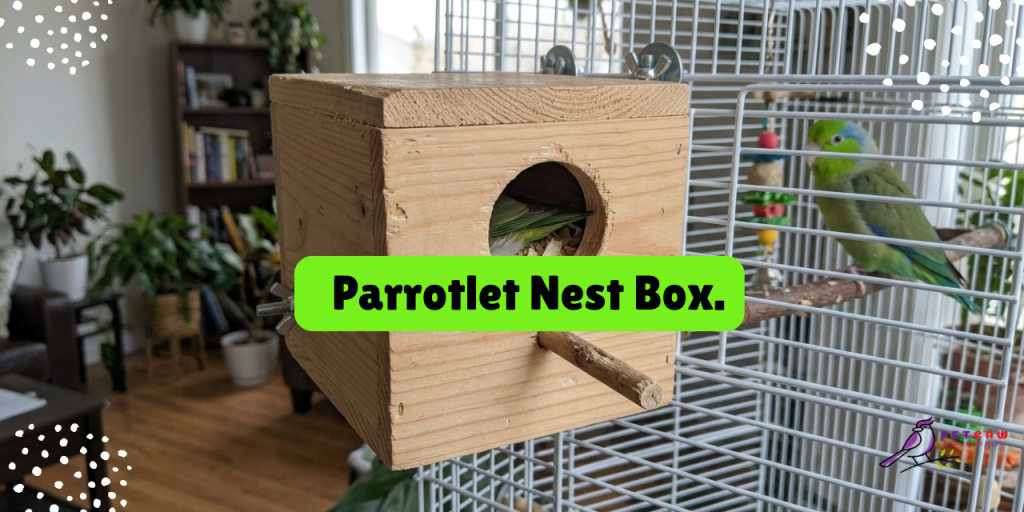
What is a parrotlet nest box and why is it necessary?
A parrotlet nest box is a specialized, enclosed wooden chamber mounted to a breeding cage that simulates the natural tree cavity nesting environment of wild Forpus parrotlets. In nature, parrotlets do not weave open stick nests, instead, they seek out hollowed branches, abandoned woodpecker holes, or wooden posts. Providing a proper nest box replicates this dark, secure cavity, giving the pair an ideal environment to lay eggs, incubate, and raise healthy chicks safely.
What are the optimal dimensions and materials for a parrotlet nest box?
A parrotlet nest box should be constructed from untreated, kiln-dried natural pine or thick birch plywood using the following target specifications:
| Dimension / Feature | Recommended Specification | Purpose & Function |
| Height | 7 to 8 inches (18 to 20 cm) | Provides adequate headroom above nesting substrate |
| Width | 6 to 7 inches (15 to 18 cm) | Keeps internal air temperature warm and stable |
| Depth | 6 to 7 inches (15 to 18 cm) | Offers sufficient floor space for 4 to 8 growing chicks |
| Entrance Hole | 1.5 inches (3.8 cm) | Fits Forpus adults snugly while keeping out drafts |
| Perch Length | 2.5 to 3 inches (6 to 8 cm) | Serves as a landing platform for male feedings |
| Concave Floor | 0.5 to 1 inch deep dip | Prevents eggs from rolling and keeps chicks grouped |
What materials should be strictly avoided when choosing a nest box?
Avoid pressure-treated lumber (contains copper or arsenic toxins), cedar (emits aromatic volatile oils that cause fatal respiratory distress in chicks), particleboard, medium-density fiberboard (MDF, which contains toxic formaldehyde glues), and plastic boxes without wooden inserts (causes condensation and slippery floors).
What are the main signs and symptoms of nest box problems?
- Egg Rolling / Scattering: Eggs spread out into cold corners rather than clustered together under the hen.
- Hen Refusal to Enter: The female peeks inside the entrance hole but refuses to roost, despite active mating behavior.
- Aggressive Box Defense or Hen Trapping: The male blocks the entry hole to trap the female, or the female attacks the male when he lands on the perch.
- Egg Eating or Chick Mutilation: Crushed eggshells with consumed contents, or feather plucking and toe-biting on newly hatched chicks.
- Physical & Environmental Red Flags: Wet, foul-smelling substrate, condensation along the inner lid, or chicks displaying splayed legs (legs pointing outward at 90-degree angles).
What causes common parrotlet nest box failures?
- Lack of a Concave Bottom: Flat floors cause eggs to roll away and chill, while slick surfaces prevent chicks from getting footing, resulting in splayed legs.
- Poor Air Circulation: Solid lids without proper side ventilation holes lead to overheating and chick suffocation.
- Toxic Bedding Materials: Cedar shavings, scented beddings, or fine sawdust clog neonatal nostrils and eyes.
- Breeder Stress & Interference: Frequent unannounced box checks, placing cages in high-traffic areas, or nutritional deficits (such as Calcium/Vitamin D3 deficiency) trigger parents to destroy their own eggs or abandon the clutch.
How do you properly setup, mount, and manage a parrotlet nest box step-by-step?
- Prepare Nesting Substrate: Pack the concave floor with 1.5 to 2 inches of medium-to-coarse untreated pine shavings. Never use fine wood dust or leave the box floor completely bare.
- Mount the Box High: Fasten the nest box externally to an upper side door or cut panel, placing the entrance hole at the highest elevation in the cage to satisfy their natural instinct for high cavity nesting. Ensure the box is bolted tightly with wing nuts to eliminate wobbling.
- Establish a Sanitary Inspection Routine: Always knock gently on the cage wall before opening the inspection door so the hen can exit calmly. Limit checks to once per day at a fixed time, and wash hands or wear nitrile gloves to prevent bacterial contamination (E. coli, Pseudomonas).
- Correct Splayed Legs & Moisture: If a chick shows signs of splayed legs, increase the pine shaving depth immediately for traction, and consult an avian vet for temporary leg hobbling. Replace damp bedding around growing chicks every 2 to 3 days.

How can breeders prevent nest box complications over the long term?
- Limit Clutches: Remove the nest box after two consecutive clutches to prevent hen calcium depletion, egg binding, and exhaustion.
- Control Humidity: Maintain room humidity at 50% to 60% during incubation to prevent chick egg-membrane binding (“shrink-wrapping”).
- Provide Full-Spectrum Light: Ensure 12 hours of UVA/UVB lighting or Vitamin D3 supplementation for thick shell formation.
- Sterilize Between Clutches: Clean the box between uses with an avian-safe disinfectant like F10 SC or chlorhexidine, and allow it to dry thoroughly in full sunlight before re-installing.
What are the most frequently asked questions about parrotlet nest boxes?
1-What is the single best bedding material?
Untreated, kiln-dried pine shavings (medium to coarse flakes) provide optimal insulation, moisture absorption, and traction.
2-How many eggs do parrotlets lay per clutch?
Parrotlets typically lay 4 to 8 small white eggs on alternate days, with incubation lasting 18 to 21 days.
3-When should the nest box be removed?
Remove the box once the youngest chick has fully fledged (left the box and is perching independently), usually at 4 to 5 weeks post-hatch.
About The Author


