
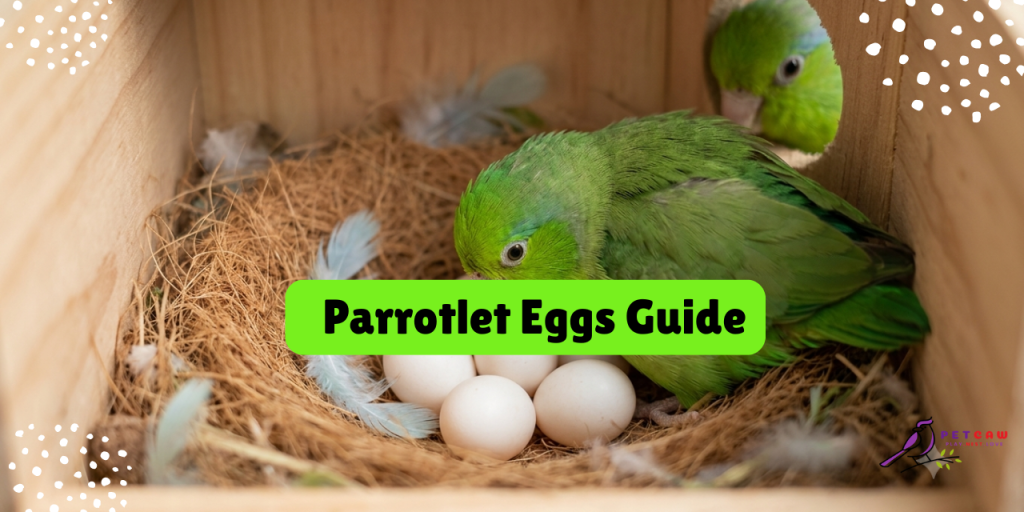
Finding parrotlet eggs in your bird’s cage can be both an exciting milestone and a source of immediate stress—especially if you weren’t actively planning to breed. Whether you are an intentional breeder or a shocked owner of a single female bird laying unfertilized clutch eggs, understanding reproductive avian health is critical. Female parrotlets (Forpus species) are prone to chronic egg-laying, nutritional deficiencies, and life-threatening medical conditions like egg binding (dystocia).
This comprehensive guide covers everything you need to know about parrotlet eggs: basic biology, symptoms of problems, step-by-step solutions for egg binding, incubation protocols, and long-term prevention strategies to protect your bird’s health.
What Are Parrotlet Eggs? Definition & Basic Biology
Parrotlet eggs are small, matte white, oval eggs laid by female parrotlets—most commonly Pacific Parrotlets (Forpus coelestis) or Green-Rumped Parrotlets (Forpus passerinus).
Unlike domestic chickens, female parrotlets do not need a male present to produce eggs. An un-mated female will lay infertile eggs if environmental triggers convince her body that it is breeding season.
Key Biological Specifications
- Egg Size: Approximately 18 mm × 14 mm (0.7 in × 0.5 in).
- Average Clutch Size: 4 to 8 eggs laid on alternate days (every 48 hours).
- Incubation Period: 18 to 22 days from the date incubation steadily begins.
- Maturity Age: Females reach sexual maturity around 1 year of age (breeding should not be permitted before 12–18 months).
Symptoms & Common Problems with Parrotlet Eggs
Reproductive activity places immense physiological stress on a female parrotlet’s body, requiring up to 6 times her normal calcium intake to form an eggshell.
| Problem | Signs & Symptoms | Primary Risk Factors |
|---|---|---|
| Egg Binding (Dystocia) | Tail bobbing, straining, sitting on cage floor, fluffed feathers, lethargy, swollen vent | Calcium deficiency, oversized egg, cold ambient temp |
| Chronic Egg Laying | Laying more than 2 clutches per year, continuous egg replacement | Excess light (>12 hrs), rich diet, mirror or nest availability |
| Soft-Shelled / Shell-Less Eggs | Rubbery, thin, or squishy eggs; egg collapses under touch | Hypocalcemia (low blood calcium), Vitamin D3 deficiency |
| Egg Yolk Peritonitis | Abdominal swelling, weakness, yellow/green loose droppings | Ruptured egg inside oviduct, bacterial infection |
Critical Warning: Egg binding is an immediate medical emergency. If your parrotlet is sitting on the floor of her cage, gasping, or bobbing her tail continuously, contact an avian veterinarian immediately.
Causes of Unwanted or Problematic Egg Laying
If your single female bird is suddenly producing parrotlet eggs, one or more environmental or physiological factors are triggering her hormones:
- Extended Daylight Hours: Exposure to artificial light beyond 10–12 hours mimics spring and summer photoperiods, signaling peak breeding time.
- High-Fat, High-Calorie Diets: Seed-only diets rich in fats simulate abundant seasonal resources needed to rear chicks.
- Inappropriate Petting: Stroking a parrotlet on her back, wings, or tail acts as physical courtship behavior.
- Hormonal Nesting Triggers: Access to cardboard boxes, dark corners, happy huts, nests, or mirrors.
Step-by-Step Solutions: What to Do When Your Parrotlet Lays an Egg
Handling parrotlet eggs depends on whether the eggs are fertile (intended for breeding) or infertile (laid by a pet female).

Scenario A: Infertile Eggs (Pet Parrotlet)
1.Prevent Replacement Laying:
Do not immediately remove the egg. If you remove it, her body will automatically lay a replacement egg to complete her clutch, depleting her calcium reserves.
2.Replenish Nutrients:
Supply a cuttlebone, mineral block, or an avian-safe liquid calcium supplement (like Calci-Lux or Calcivet) mixed into her food/water as directed by a vet.
3.Let Her Sit for the Full Incubation Cycle:
(21-24 Days).
Allow her to sit on the infertile eggs for roughly 3 weeks. Once she realizes they will not hatch, she will naturally abandon them. Remove them one by one at that stage.
Scenario B: Fertile Eggs (Breeding Pair)
If you have a bonded pair and want to raise chicks:
1.Check Fertility:
Candle the eggs at Day 6-7 using a small LED flashlight behind the egg in a dark room. Fertile eggs will show a web of tiny red blood vessels; infertile eggs will look clear and yellow.
2.Nest Environment:
Keep the room temperature between 70°F–78°F (21°C–25°C) with 55–65% relative humidity to ensure the egg membranes do not dry out during parrotlet egg hatching.
3.Post-Hatch Prep:
Offer daily fresh egg food (hard-boiled chicken egg with shell ground in), sprouted seeds, and dark leafy greens to support the feeding parents.
Prevention & Long-Term Care Tips: How to Stop Chronic Egg Laying
To protect your female bird’s long-term health, apply these proactive husbandry changes:
- Adjust the Photoperiod: Provide 12 to 14 hours of uninterrupted darkness every night by covering the cage with a light-blocking cloth.
- Re-arrange the Cage Layout: Rearrange perches, toys, and food dishes weekly to disrupt her territorial “nesting” mindset.
- Remove Nesting Stimuli: Take away snuggle huts, paper shreds, mirrors, and deep food dishes that can be used as nest bowls.
- Modify Petting Habits: Only touch your parrotlet on the head and neck. Avoid back and tail scratches.
- Switch to High-Quality Pellets: Transition from a seed-heavy diet to high-grade avian pellets complemented by fresh vegetables for proper avian nutrition.
Frequently Asked Questions (FAQs)
How can I tell if a parrotlet egg is fertile without candling?
You cannot confirm fertility visually with the naked eye during the first few days. However, as incubation progresses past 7–10 days, a fertile egg will turn a bright chalky white, whereas an infertile egg will look yellowish or semi-translucent.
What should I do if a parrotlet egg breaks in the cage?
Remove the broken shell and clean the area immediately to prevent bacterial growth. If the egg broke inside the bird or stuck to her feathers near her vent, consult an avian vet to prevent severe internal infections.
Can a single parrotlet lay eggs?
Yes. Female parrotlets can lay unfertilized eggs without a male, similar to chickens.
About The Author


