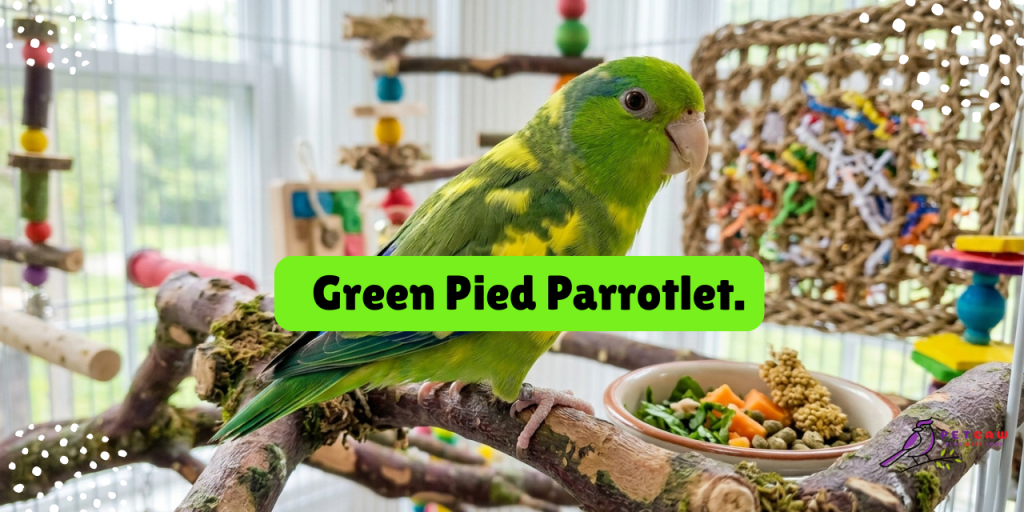
The Green Pied Parrotlet (Forpus coelestis or Forpus passerinus mutation) is one of the most stunning, sought-after color variations in the world of pocket parrots. Combining the vibrant, fiery emerald tones of a wild-type parrotlet with brilliant buttercup-yellow pied blotches, this tiny psittacine packs the bold intelligence, loyalty, and curiosity of a full-sized Amazon parrot into a 5-inch body.
Whether you are a novice bird owner considering a green pied parrotlet for your home or an experienced aviculturist seeking deeper insights into parrotlet genetics, behavioral troubleshooting, diet optimization, and disease prevention, this guide covers every crucial aspect of parrotlet care.
What Is a Green Pied Parrotlet? Definition & Genetic Background
A Green Pied Parrotlet is a specific color mutation occurring primarily in the Pacific Parrotlet (Forpus coelestis) and occasionally in the Green-Rumped Parrotlet (Forpus passerinus). Rather than presenting a uniform wild-type forest green body, a green pied parrotlet exhibits irregular patches of yellow caused by an incomplete loss or inhibition of dark melanin pigments.
Genetic Mechanics of the Pied Mutation
The “pied” trait in Pacific parrotlets operates predominantly as a dominant or co-dominant mutation.
- Melanin Inhibition: Pied genetics randomly halt the distribution of eumelanin (black/brown pigment) in specific feather tracts. Because green in parrotlet feathers is produced by structural blue light reflection over a yellow carotenoid base, removing the dark melanin leaves pure, radiant yellow feathering in affected spots.
- Variegation Levels: Pied expression varies dramatically. Birds can be “lightly pied” (few yellow ticks on the head or wings), “medium pied” (splotches across the back, chest, and wings), or “heavy pied” (predominantly yellow with scattered green patches).
- Maturation Shift: Unlike many species, green pied parrotlets often lighten in color as they age. After their first juvenile molt (around 5 to 7 months of age), pied patches often expand or brighten into richer yellow tones.
Physical Characteristics & Identification Matrix
| Attribute | Specification |
| Scientific Name | Forpus coelestis (Pacific) / Forpus passerinus (Green-Rumped) |
| Average Adult Size | 4.5 to 5 inches (11.5 to 13 cm) |
| Average Adult Weight | 28 to 35 grams |
| Primary Base Color | Bright forest green to lime green with irregular canary-yellow patches |
| Beak & Feet Color | Light horn-colored beak, pinkish-flesh colored feet |
| Average Lifespan | 15 to 20 years (up to 25+ years with elite care) |
Sexual Dimorphism: How to Sex a Green Pied Parrotlet
While color mutations can blur visual sexual indicators in some parrot species, green pied Pacific parrotlets generally remain dimorphic:
- Male Green Pied: Retains vivid cobalt-blue or dark violet markings behind the eye, on the rump/lower back, and along the primary wing coverts. Heavy pied males may show broken or pastel-blue patches, but blue remains visible.
- Female Green Pied: Completely lacks cobalt-blue markings on the wings and rump. Her plumage is strictly a combination of green, yellow, and occasionally faint lime highlights around the face.
Symptoms & Problems: Identifying Parrotlet Distress
Despite their robust nature, green pied parrotlets are susceptible to acute stress, behavioral disorders, and dietary imbalances. Because birds naturally mask illness to avoid predators in the wild, recognizing early warning signs is vital.
Behavioral Problems
- Severe Territorial Biting (“Napoleon Complex”): Lunging, beak-snapping, or drawing blood when hands enter the cage or approach perches.
- Feather Plucking & Over-Grooming: Stripping chest, leg, or underwing feathers down to the gray down or bare skin.
- Excessive Screaming & Alarm Calling: Persistent, shrill chirping aimed at demanding attention or expressing environmental anxiety.
- Mate or Toy Hyper-Bonding: Regurgitating onto specific perches, mirrors, or human fingers while displaying aggressive defense of those objects.
Physical & Medical Symptoms
| Symptom Category | Visible Signs | Potential Risk |
| Respiratory Distress | Tail bobbing with each breath, open-mouth breathing, wet nostrils | Air sac mites, Aspergillosis, bacterial pneumonia, PTFE poisoning |
| Gastrointestinal Issues | Undigested seeds in droppings, lime-green diarrhea, head-shaking with sticky vomit | Avian Bornavirus, Macrorhabdus (Megabacteria), internal parasites |
| Nutritional Deficiency | Flaky beak, overgrown talons, dull yellowing/blackening feather tips | Hypovitaminosis A, Fatty Liver Disease (Hepatic Lipidosis) |
| Systemic Illness | Lethargy, sitting fluffed on the cage floor, eyes half-closed during daylight | Avian Chlamydiosis (Psittacosis), polyomavirus, sepsis |
Root Causes of Common Green Pied Parrotlet Issues
Understanding why a green pied parrotlet displays physical or behavioral problems is the first step toward effective treatment.
1. The Seed-Only Diet Pitfall
In the wild, parrotlets forage for fresh grass seeds, blossoms, berries, and vegetation. In captivity, feeding a commercial seed-only diet supplies excessive fat and carbohydrates while lacking Vitamin A, Calcium, and essential amino acids. High-fat diets (e.g., sunflower seeds, millet) lead directly to Hepatic Lipidosis (Fatty Liver Disease), arterial blockages, and premature mortality.
2. Hormonal Overstimulation
Parrotlets have strong breeding drives. Environmental triggers like artificial light lasting over 12 hours, soft/warm foods, reflective mirrors, fabric nesting huts (“snuggle huts”), and petting along the back or wings trigger surges of sex hormones. This results in extreme cage defense, territorial biting, and chronic egg-laying in females (leading to egg binding or hypocalcemia).
3. Environmental Boredom & Lack of Foraging
In nature, parrotlets spend 60% of their waking hours foraging, flying, and socializing. A green pied parrotlet trapped in a small cage with smooth dowel perches, no shreddable toys, and food served in a plain dish quickly develops psychological frustration, leading to feather plucking and stereotypical cage-pacing.
4. Aerosol & Environmental Toxins
Avian respiratory tracts feature hyper-efficient air sacs that continuously circulate air. This makes green pied parrotlets ultra-sensitive to airborne toxins:
- Overheated PTFE / Teflon (Polytetrafluoroethylene): Non-stick cookware releases fatal odorless fumes when heated.
- Aerosol Sprays & Fragrances: Scented candles, air fresheners, perfume, cleaning chemicals, and incense cause acute air sac inflammation.
- Heavy Metals: Chipped cage paint, zinc, lead-weighted curtain strings, or galvanized wire cause zinc/lead toxicosis.

Step-by-Step Solutions & Practical Care Protocols
Step 1: Transitioning to a Balanced Avian Diet
To maximize your green pied parrotlet’s lifespan, convert them to an optimized nutritional schedule:
- Base Pellets (50–60%): Cold-pressed, organic, uncolored micro-pellets formulated for small psittacines.
- Fresh Vegetable “Chop” (30–40%): Finely minced dark leafy greens (kale, dandelion greens, swiss chard), broccoli, grated carrots, red bell peppers, cooked sweet potato, and chopped zucchini.
- Controlled Seeds & Sprouts (10%): Soaked or sprouted seeds (chia, flax, canary seed, safflower) and millet reserved strictly as rewards for training sessions.
To execute the diet transition successfully, begin by mixing 70% seed with 30% pellets during morning feedings. Sprinkling finely chopped greens over warm cooked sweet potato encourages immediate conversion. Over the course of 4 to 6 weeks, gradually reduce seed volume by 10% each week until pellets and fresh chop form the primary daily diet.
Step 2: Correcting Biting & Territorial Aggression
- Remove Hormonal Triggers: Immediately remove fabric huts, mirrors, and deep nest-like bowls.
- Respect Territorial Boundaries: Do not reach directly into the cage to grab your bird. Open the door, allow the parrotlet to climb to the outside perch, and ask them to step up on neutral ground.
- Master Clicker & Target Training: Hold a thin chopstick near the bird. The instant the parrotlet touches the tip of the stick with its beak, click and immediately offer a seed treat. Use target training to guide the bird in and out of the cage effortlessly without forcing physical contact.
- Enforce the “Step Up” Command: Train your parrotlet to step onto a hand or handheld perch reliably. Reward every successful step-up with immediate positive reinforcement.
Step 3: Cage Setup & Environmental Enrichment
- Minimum Cage Size: 24 inches wide × 24 inches deep × 24 inches high for a single bird (larger is always better). Horizontal space is vital for flight.
- Bar Spacing: Strictly 3/8 inch to 1/2 inch max. Wider spacing risks head entrapment or escape.
- Perch Management: Replace factory smooth dowels with a variety of natural branch perches (manzanita, dragonwood, hazelnut, eucalyptus) ranging from 3/8″ to 3/4″ in diameter. This exercises foot muscles and prevents bumblefoot (pododermatitis).
- Foraging & Destruction Toys: Provide shreddable toys made of balsa wood, seagrass, yucca, paper rope, and mahogany pods. Hide pellets or seeds inside woven paper rolls to encourage natural foraging behaviors.
Prevention & Long-Term Health Protocols
- Photoperiod Management: Maintain a strict 10 to 12 hours of uninterrupted dark, quiet sleep per night. Use a breathable black cage cover if necessary to keep hormones regulated.
- Daily Hygiene Schedule: Replace cage liner paper every 1–2 days. Wash food and water dishes daily with hot, soapy water. Perform a full cage scrub with avian-safe disinfectant (F10 SC or diluted apple cider vinegar) monthly.
- Bathing Access: Offer a shallow bath dish or mist your green pied parrotlet with warm water 2–3 times weekly to promote skin hydration, feather health, and clean powder-down maintenance.
- Avian Vet Surveillance: Establish a relationship with a certified Avian Veterinarian (ABVP). Schedule yearly wellness checks including physical exams, weight recording, micro-fecal analysis, and baseline blood panels.
Frequently Asked Questions
Are Green Pied Parrotlets good for apartment living?
Yes. Green Pied Parrotlets are ideal for apartments. While active and chirpy, they lack the lung volume for high-decibel screaming common to larger conures or cockatoos. Their vocalizations consist of soft tweets, chatter, and quiet whistles.
Can a Green Pied Parrotlet learn to talk?
Yes. Parrotlets are capable of learning words, short phrases, and tunes. Males tend to mimic human speech more readily than females, speaking in a tiny, high-pitched, slightly robotic voice. Clear repetition and positive reinforcement accelerate speech learning.
Should I keep Green Pied Parrotlets in pairs or as a single bird?
If you can dedicate 1–2 hours of daily interactive out of-cage time, a single green pied parrotlet will form a deep bond with you as its flock mate. If you work long hours, keeping a bonded pair prevents isolation, though paired birds may focus more on each other than on human handlers.
What is the average cost of a Green Pied Parrotlet?
A Green Pied Parrotlet from a reputable aviculturist generally ranges from $250 to $500 USD, depending on the intensity of the pied markings (light vs. heavy pied) and visual clarity. Factor in an additional $300–$500 for a quality cage, avian lighting, foraging toys, and initial vet checks.
About The Author


