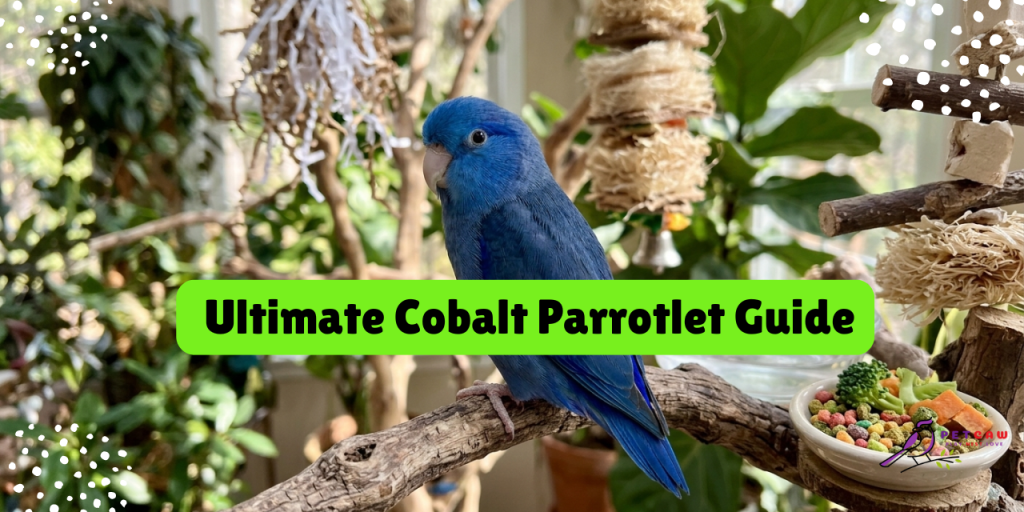
If you are looking for a miniature “pocket parrot” that packs all the intelligence, attitude, and visual splendor of a giant macaw into a 5-inch body, look no further than the Cobalt parrotlet.
This striking color mutation has captured the hearts of avian enthusiasts worldwide. However, managing its specific genetics, unique dietary requirements, and feisty personality requires expert care.
This comprehensive guide covers everything from genetic origins to practical care steps, helping you understand how to keep your Cobalt parrotlet thriving.
What is a Cobalt Parrotlet? (Definition & Genetics)
In the aviculture community, the term Cobalt parrotlet refers to a highly sought-after color mutation of the Pacific Parrotlet (Forpus coelestis).
It is important to make a distinction here: there is also a distinct wild species called the Cobalt-rumped parrotlet (Forpus xanthopterygius). However, when pet owners and breeders refer to a “Cobalt parrotlet,” they are almost always discussing the single dark factor blue color mutation of the Pacific Parrotlet.
The Science of the “Dark Factor” Mutation
Standard Pacific parrotlets are bright green in the wild. In 1986, the first blue mutations occurred in Belgium. When breeders combine the simple recessive blue gene with a structural dark factor (denoted as D), it alters how light refracts through the feather’s structure:
- No Dark Factor (dd): Normal Sky Blue parrotlet.
- One Dark Factor (Dd): Cobalt parrotlet—a deep, rich royal blue.
- Two Dark Factors (DD): Mauve parrotlet—a dark, smoky gray-black bird.
Unlike recessive traits, the dark factor is an incomplete dominant trait. It cannot be “carried” or split; a bird either visually has the dark factor gene or it doesn’t.

Common Behavioral & Health Issues in Cobalt Parrotlets
Because color mutations are bred from a limited gene pool, Cobalt parrotlets can be prone to specific physical and psychological issues if their environment is not carefully managed.
1. The “Tiny Macaw” Aggression (Territoriality)
Parrotlets do not realize they only weigh 30 grams. They are notoriously feisty, highly territorial, and will easily attack birds ten times their size. This behavior escalates during hormonal seasons.
2. Chronic Feather Plucking
Due to their high intelligence, Cobalt parrotlets are highly susceptible to boredom-induced feather destructive behavior. If they lack foraging opportunities, they will quickly redirect their energy toward self-mutilation.
3. Diet-Related Kidney Disease
Many owners mistakenly feed parrotlets a seed-only diet. Because of their unique metabolic rate, a pure seed diet causes fatty liver disease and severe kidney damage.
4. Stress-Induced Sudden Death Syndrome
These miniature birds have highly sensitive respiratory systems and can easily panic. Environmental stress or exposure to household toxins can be fatal.
Causes of Health and Behavioral Decline
Understanding why these issues occur is the first step toward correcting them.
| Problem | Root Cause |
| Aggression / Biting | Hormonal surges, cramped cages, or cage territoriality. |
| Feather Plucking | Lack of environmental enrichment, dry air, or poor nutrition. |
| Kidney / Liver Issues | Excessively fatty seed-only diets lacking fresh vitamin-rich vegetation. |
| Respiratory Failure | Exposure to Teflon (PTFE) fumes, aerosols, scented candles, or drafty cages. |
Step-by-Step Solutions for Managing Your Cobalt Parrotlet
If your parrotlet is showing signs of cage aggression, feather chewing, or selective eating, implement the following steps to get their health and behavior back on track.
1.Transition to a Balanced Diet:
Weeks 1-3.
Never switch diets cold turkey. Slowly transition your parrotlet from a heavy seed diet to a ratio of 30% high-quality pellets, 45% fresh vegetables/sprouts, 15% low-fat seeds, and 10% target treats/fruits. Moisten pellets or mix them with chopped organic broccoli, sweet potatoes, and kale to encourage tasting.
2.Expand and Optimize the Habitat:
Immediate Action.
Move the bird to a cage that is at least 30″ x 18″ x 18″ with a bar spacing of no more than 1/2 inch. Place the cage in a corner of the room away from direct kitchen fumes and cold drafts. Ensure they receive 10 to 12 hours of dark, covered sleep nightly to regulate hormones.
3.Introduce Shredding & Foraging Toys:
Weekly Rotation.
Hang natural wood, yucca, and sisal rope toys. Hide their daily pellet portion inside paper wraps or cardboard foraging boxes. This forces them to work for food, satisfying their natural wild instincts and curing feather plucking.
4.Establish Gentle Boundaries and Training:
Daily 10-Min Sessions.
If the bird bites, do not yell or pull away quickly, as this rewards them with drama. Use a firm, quiet “no” and place them on a neutral stand away from their cage. Target train using a chopstick and millet to reinforce positive, calm behaviors.
Expert Husbandry Tips for Prevention
Crucial Safety Warning:
Non-stick cookware containing Teflon (PTFE) emits odorless, toxic gases when heated that can kill a parrotlet within minutes. Switch to stainless steel, cast iron, or ceramic cookware immediately. Avoid all aerosol sprays, perfumes, and plug-in air fresheners in the same house.
- Provide Regular Bathing Opportunities: Cobalt parrotlets love to splash. Offer a shallow dish of fresh room-temperature water or gently mist them twice a week. This keeps their feathers clean and reduces skin itchiness that leads to plucking.
- Keep Them Single as Companion Pets: If you want a tame, hand-bonded pet, keep a single Cobalt parrotlet. Keeping two together will cause them to bond with each other, often leading them to reject human contact or display aggressive territorial fights.
- Avoid Cotton Rope Toys: Fibers from cotton or synthetic ropes can easily be swallowed, causing life-threatening crop impaction. Stick to safe natural materials like sisal, abaca, seagrass, and balsa wood.
Frequently Asked Questions (FAQs)
What is the lifespan of a Cobalt parrotlet?
With an optimal diet consisting of fresh vegetables, high-quality pellets, and plenty of mental stimulation, a Cobalt Pacific parrotlet can live 12 to 15 years in captivity.
How do you tell the difference between males and females?
Pacific parrotlets are sexually dimorphic. Males of the Cobalt mutation will display bright royal-cobalt blue markings on their rumps, along the edges of their wings, and behind their eyes. Females lack these prominent cobalt wing markings, although some may show a soft turquoise tint on their rumps depending on their sub-species lineage.
Can Cobalt parrotlets talk?
Yes, they have a limited talking ability. While they are not as vocal as African Greys, with patience they can learn to mimic several words, repeat short phrases, and copy household whistling sounds.
Are they suitable for apartments?
Absolutely. They are physically incapable of screaming like larger conures or cockatoos. While they chatter throughout the day, their vocalizations are quiet and won’t disturb neighbors.
About The Author


