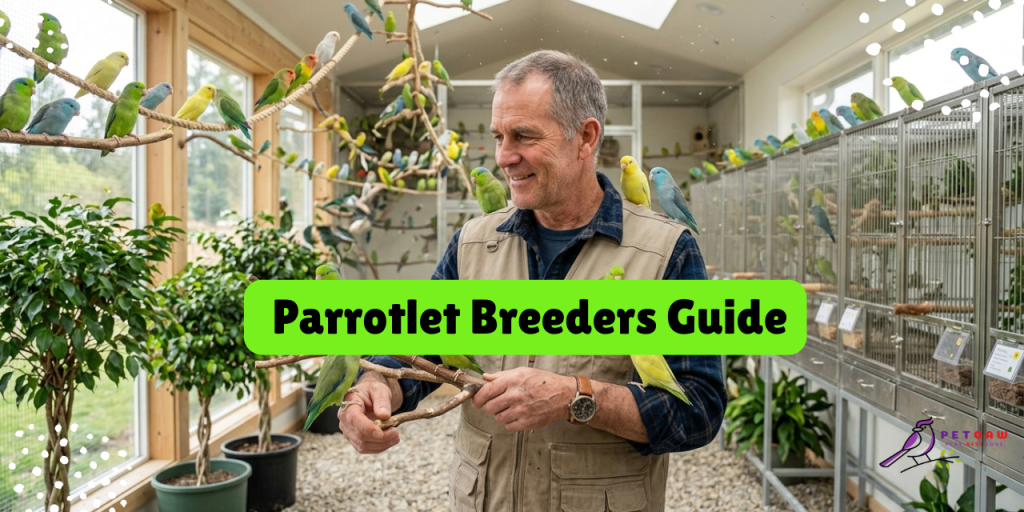
Finding ethical, reputable parrotlet breeders is the single most critical decision you will make in your journey to adopting a pocket parrot. Whether you are drawn to the fiery personality of a Pacific Parrotlet (Forpus coelestis) or the striking hues of a Cobalt mutation, the environment in which a parrotlet is hatched, hand-fed, and socialized permanently shapes its lifelong health, temperament, and trust in humans.
Navigating the pet trade can feel overwhelming. Unregistered “backyard breeders,” high-volume bird mills, and deceptive online scams frequently exploit enthusiastic buyers with unweaned chicks, poor genetics, or non-existent birds.
This comprehensive guide breaks down everything you need to know about parrotlet breeders: defining standards, identifying red flags, asking the right questions, navigating pricing and shipping, and ensuring your new companion arrives healthy, well-adjusted, and ready to thrive.
What is a Reputable Parrotlet Breeder?
A parrotlet breeder (or specialized aviculturist) is a professional or dedicated hobbyist who pairs, hatches, raises, and socializes parrotlet species—most commonly Pacific, Green-Rumped, or Spectacled Parrotlets—with an emphasis on genetic health, proper weaning, and behavioral conditioning.
| Ethical Breeding Stage | Standards & Best Practices | Impact on Your Pet |
| 1. Parent Stock & Genetics | Health-tested, non-related parent pairs; closed aviary protocols to prevent disease. | Prevents inherited organ flaws and incurable viral infections. |
| 2. Raising & Socialization | Co-parenting or gentle hand-raising with daily human handling and flock exposure. | Builds trust, reduces fear biting, and eases transition to family life. |
| 3. Weaning & Health Verification | Abundance weaning onto pellets/greens; DNA sexing and 48–72 hr vet guarantee. | Ensures a confident, fully nourished bird free of nutritional deficits. |
Unlike high-volume commercial producers who treat birds as rapid commodities, reputable parrotlet breeders focus on quality over quantity. They maintain clean facilities, provide species-appropriate nutrition, work closely with certified avian veterinarians, and prioritize the long-term welfare of both parent pairs and offspring.
Problems & Risks: The Dangers of Unethical Breeding
Purchasing a parrotlet from an irresponsible source or scammer creates severe financial, physical, and emotional consequences for the owner and the bird. Understanding these risks highlights why choosing the right breeder is paramount.
1. Unweaned or Forced-Weaned Chicks
Unscrupulous sellers often push buyers to accept unweaned chicks (birds still requiring syringe feedings) under the false claim that it creates a stronger bond. In reality:
- Hand-feeding requires precise temperature and mechanical skill. Crop burns, sour crop, aspiration pneumonia, and fatal starvation are frequent outcomes in novice hands.
- Forced weaning (cutting off formula too early) creates insecure, anxious adult birds prone to screaming and feather-plucking.
2. Hidden Incurable Pathogens
Backyard breeders rarely screen parent birds for highly contagious, deadly avian viruses. Common undetected parrotlet diseases include:
- Psittacine Beak and Feather Disease (PBFD)
- Avian Bornavirus (ABV) / Proventricular Dilation Disease (PDD)
- Chlamydiosis (Psittacosis) – A zoonotic disease transmissible to humans.
- Polyomavirus
3. Behavioral and Social Traumas
Parrotlets raised in isolation or snatched prematurely from parent nests without gentle human socialization often develop severe behavioral issues upon reaching sexual maturity (around 8–12 months). These include territorial aggression, chronic biting, extreme fear of human hands, and neurotic behaviors.
4. Genetic Deformities & Inbreeding
Inbreeding to quickly produce rare color mutations (such as Fallow, Turquoise, or Lucida) without outcrossing to strong, non-related stock yields fragile birds with shortened lifespans, organ failure, blind spots, or splay legs.
Causes: Why Are Bad Breeding Practices So Prevalent?
To safeguard yourself as a buyer, it helps to understand why poor breeding practices persist in the exotic bird industry.
- Lack of Federal Regulation: In many regions, small birds like parrotlets fall into regulatory blind spots with minimal oversight compared to larger domestic animals.
- High Profit Margins on Rare Mutations: Color mutations command high prices ($300 to over $1,000). Profit-driven sellers cut corners on diet, vet testing, and housing to maximize gains.
- High Demand, Low Awareness: First-time bird owners often mistake small size for low maintenance, inadvertently supporting backyard breeders through impulse purchases on online classifieds.
Step-by-Step Guide: How to Find and Evaluate Parrotlet Breeders
Follow this structured protocol to identify, vet, and choose an ethical parrotlet breeder.
Step 1: Research and Locate Potential Breeders
Begin by compiling a list of candidates from legitimate, verifiable sources:
- Avian Organizations: Look for members of the Society of Parrotlet Breeders and Exhibitors (SPBE), American Aviculture Association (AFA), or regional avicultural societies.
- Avian Vet Recommendations: Contact local avian veterinary clinics. Veterinarians know which local parrotlet breeders maintain clean, disease-free facilities.
- Parrot Rescue Networks: Dedicated rescues often collaborate with reputable breeders or rehome young birds.
Step 2: Conduct Initial Screening (Red Flag Assessment)
Filter out unsafe options immediately by comparing breeder traits against this standard checklist:
| Evaluation Metric | Reputable Parrotlet Breeder | Unethical / Scammer Breeder |
| Weaning Policy | Sells only 100% fully weaned chicks eating pellets, seed, and fresh foods. | Pushes unweaned chicks onto buyers to “save money” or “bond better”. |
| Health Guarantee | Offers a written 48–72 hour vet-check guarantee and genetic disease disclosure. | No written contract, cash-only, no health refund policy. |
| Dietary Foundation | Feeds a varied diet: high-quality pellets, fresh sprouts, chopped vegetables, and grains. | Feeds exclusively low-grade, all-seed diets. |
| Transparency | Welcomes visits or provides live video tours; shares avian vet references. | Refuses video calls, insists on meeting in public parking lots, or hides facility conditions. |
| Sexing | Provides DNA sexing certificates (feather or blood test). | Guesses gender based solely on visual traits for subtle mutations, or provides no proof. |
| Buyer Vetting | Asks detailed questions about your home, cage size, dietary plans, and experience. | Sells to anyone instantly without asking a single question about bird care. |
Step 3: Ask the Essential 8 Questions
When communicating with a prospective parrotlet breeder, ask these specific questions to gauge their expertise and ethics:
- “What weaning method do you use, and what foods is the baby currently eating?”
- Ideal Answer: Abundance weaning. The chick is offered pellets, fresh greens (“chop”), and cooked grains until it independently stops taking formula.
- “Are your breeding pairs tested for Polyomavirus, PBFD, and Chlamydiosis?”
- Ideal Answer: Yes, with documentation from an avian laboratory.
- “Do you practice co-parenting or hand-rearing?”
- Ideal Answer: Co-parenting or gentle hand-raising with daily human handling and flock socialization.
- “Can you provide the contact information for your avian veterinarian?”
- Ideal Answer: Provides the clinic name and vet’s contact details without hesitation.
- “How are the baby parrotlets socialized to household environments?”
- Ideal Answer: Exposed to normal household sounds, gentle handling by multiple people, and varied toys.
- “Are the chicks allowed to fledge and practice flying before any wing trim?”
- Ideal Answer: Yes. Fledging builds spatial awareness, muscle development, and confidence.
- “What is your policy if my avian vet finds a health issue within 72 hours?”
- Ideal Answer: Full refund or replacement bird upon receiving the veterinarian’s formal diagnostic report.
- “Do you offer post-adoption support?”
- Ideal Answer: Yes, encouraging updates and offering life-long guidance on diet and behavior.

Price Guidelines & Mutation Expectations
Parrotlet prices vary based on mutation rarity, breeder reputation, regional demand, and included health testing.
Warning: Extremely low prices (e.g., $50–$100 for a rare mutation) are almost always a scam or a sign of a sick, improperly raised bird from a bird mill.
| Mutation / Type | Estimated Price Range (USD) | Key Visual Characteristics |
| Pacific (Wild Type Green) | $150 – $300 | Bright green body; males have vibrant blue rump, wing coverts, and eye streaks. |
| Blue Pacific | $250 – $450 | Soft blue body; males feature deep cobalt blue accents. |
| American Yellow / Lucida | $300 – $500 | Bright butter-yellow body with soft green/blue wash. |
| American White | $350 – $550 | Soft powder-blue to near-white body with delicate blue markings on males. |
| Turquoise / Fallow / Pastel | $400 – $800+ | Complex mutation combinations with red/ruby eyes (Fallow) or seafoam tones. |
| Marble / Pied Mutations | $450 – $900+ | Distinct blotched or mottled feather patterns; highly sought after by collectors. |
Prevention & Best Practices: Preparing for Your Parrotlet
Once you have chosen an ethical parrotlet breeder and placed a deposit, follow these preparation steps to ensure a smooth transition:
1. Set Up an Appropriate Enclosure
Despite their tiny size (~30–35 grams), parrotlets have tremendous energy levels and need room to fly and forage.
- Minimum Cage Size: 24 inches wide × 18 inches deep × 24 inches high (larger is always better).
- Bar Spacing: Strictly 1/2 inch or less to prevent head entrapment or escape.
- Perches: Natural branch perches (dragonwood, manzanita, eucalyptus) of varying diameters (3/8″ to 3/4″) to prevent pododermatitis (bumblefoot). Avoid smooth dowels and concrete/sand perches.
2. Schedule the Initial Avian Vet Check
Arrange a new-bird health exam within 48 to 72 hours of pickup/delivery.
- Request a complete physical exam, fecal gram stain/wet mount, and baseline bloodwork or viral screening if not already provided by the breeder.
3. Quarantine (If You Own Other Birds)
If you already have birds at home, keep your new parrotlet in a separate room with independent air circulation for 30 to 45 days. Wash hands and change clothes between handling different birds to prevent potential cross-contamination.
4. Transition Diets Gradually
Never switch your parrotlet’s diet abruptly on day one.
- Ask the breeder for a 2-week supply of the exact diet the bird is accustomed to.
- Gradually introduce your target high-quality pellet and fresh organic “chop” (kale, broccoli, sweet potato, bell peppers, quinoa) over several weeks.
Frequently Asked Questions (FAQs)
Should I get a male or female parrotlet from a breeder?
Both sexes make wonderful companions when properly socialized. Males are slightly more inclined to learn mimicry or simple words, while females can be fiercely loyal and spunky. Females carry a risk of chronic egg-laying if their lighting and diet aren’t carefully managed, so discussing lineage with your breeder is helpful for parrotlet eggs.
Is it safe to have a breeder ship a parrotlet by air?
Yes, when performed by an experienced breeder using approved pet cargo carriers (such as Delta Cargo or United PetSafe). Birds travel in climate-controlled, pressurized compartments. However, local pickup or driving to meet the breeder is always preferable to minimize transit stress.
What is the average lifespan of a parrotlet from a reputable breeder?
A well-bred parrotlet raised on a nutritious diet with proper veterinary care can live 15 to 20 years. Inbred or poorly raised birds from backyard breeders often suffer early mortality between 3 and 7 years due to organ malfunction or latent disease.
Can I keep two parrotlets together?
Parrotlets possess large-parrot personalities in tiny bodies and can be territorial. Unless you plan to house them in a massive flight cage or aviary, it is generally recommended to keep single pet parrotlets in separate cages side-by-side to prevent territorial fights.
How do I know if an online parrotlet breeder is a scammer?
Common online scam signs include: prices that are suspiciously low, requests for payment exclusively via non-refundable methods (Zelle, Western Union, crypto), stolen photos (verifiable via reverse image search), refusal to do a live video call with the bird, and sudden demands for “extra shipping crate insurance fees.”
Final Checklist Before Buying
Before making a final commitment or sending a deposit to any parrotlet breeder, run through this quick checklist:
- [ ] Breeder provided proof of full weaning onto pellets and fresh foods.
- [ ] DNA sexing certificate is included.
- [ ] Written 48–72 hour health guarantee contract provided.
- [ ] Avian vet contact information shared and verified.
- [ ] You have seen live video or visited the bird in person.
- [ ] Cage, natural perches, and high-quality food are set up at home.
About The Author


