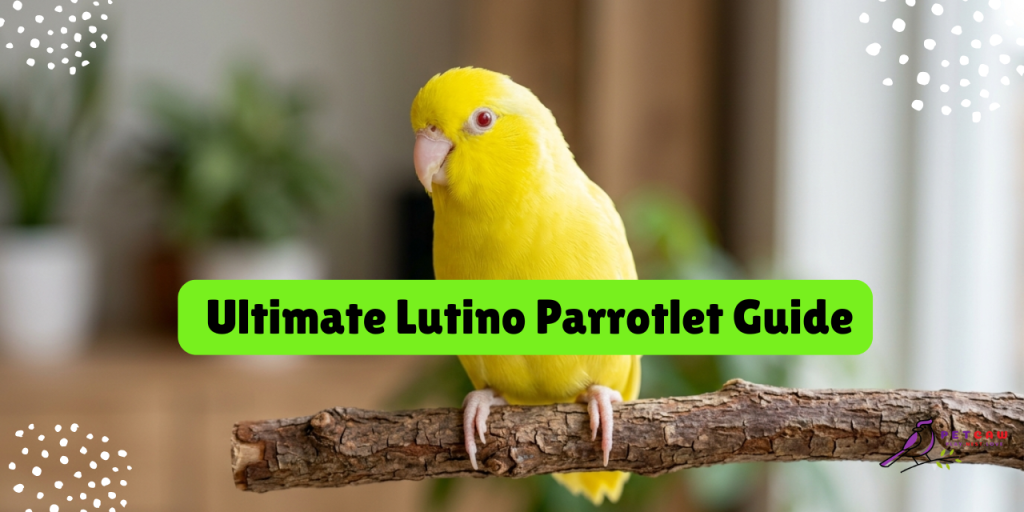
If you are looking for a vibrant companion packed with a big parrot personality in a pocket-sized body, the Lutino parrotlet is a true showstopper. Recognizable by its striking bright yellow plumage, ruby-red eyes, and energetic disposition, this distinct color mutation of the Pacific Parrotlet (Forpus coelestis) has earned a top spot among bird enthusiasts.
However, owning a Lutino parrotlet requires specialized knowledge. Beyond their playful nature, their unique genetic makeup introduces specific health considerations—such as light sensitivity—and behavioral dynamics that every owner must understand to ensure a happy, healthy pet.
This expert guide breaks down everything you need to know about the Lutino parrotlet, covering genetics, daily care, common behavioral problems, step-by-step solutions, and preventive health strategies.
What is a Lutino Parrotlet?
A Lutino parrotlet is a specific genetic color mutation of the Pacific Parrotlet. Unlike the wild-type green parrotlet, a Lutino lacks dark pigment, resulting in a distinct visual appearance.
The Genetics Behind the Yellow Feathers
In birds, coloration is primarily driven by two pigments: melanin (which produces dark colors like black, brown, and grey) and psittacin (which produces bright yellows, oranges, and reds).
- Melanin Suppression: The Lutino mutation is a sex-linked recessive trait that completely suppresses melanin production across the bird’s entire body.
- Retained Psittacin: Because melanin is absent, the underlying yellow psittacin pigment shines through completely, giving the bird its signature neon-yellow body.
- Red Eyes & Pale Features: Without melanin in the iris and skin, Lutino parrotlets feature distinct red or pinkish eyes, pale pink feet, and horn-colored beaks.
Key Differences: Lutino vs. Lookalikes
- Lutino: True red eyes, brilliant yellow body, zero grey or dark pigment anywhere on feathers or feet.
- American Yellow (Dilute): Dark black or brown eyes with a softer, lime-yellow body tone.
- Fallow: Dark red or plum-colored eyes, but retains soft greyish or brownish washes on the wings.
Lutino Parrotlet At-A-Glance
| Feature | Specification |
| Scientific Name | Forpus coelestis (Lutino mutation) |
| Average Size | 4.5 – 5 inches (11 – 13 cm) |
| Weight | 30 – 35 grams |
| Lifespan | 12 – 20 years (with optimal care) |
| Noise Level | Low to Moderate (quiet chirps, minimal screaming) |
| Talking Ability | Moderate (can learn short words and simple whistles) |
| Temperament | Feisty, curious, highly affectionate, bold |
Common Behavioral & Health Problems in Lutino Parrotlets
While Lutino parrotlets make deeply rewarding pets, owners frequently run into predictable challenges. Recognizing symptoms early allows for immediate resolution.
1. Light Sensitivity (Photophobia)
Because Lutinos lack protective melanin in their eyes, their irises allow significantly more light to enter compared to dark-eyed birds.
- Symptoms: Squinting under standard room lights, frequent head-tucking, reluctance to fly in brightly lit rooms, or excessive eye rubbing.
2. Cage Aggression & Biting
Parrotlets share close genetic links with large Amazon parrots and inherit a bold, assertive disposition. When feeling territorial, they can turn to biting.
- Symptoms: Nipping fingers when approaching the cage, lunging at hands entering their space, resource guarding food bowls, or chasing hands.
3. Feather Plucking & Stereotypic Chewing
Parrotlets are exceptionally intelligent. Without adequate environmental enrichment and mental stimulation, stress and boredom rapidly convert into destructive habits.
- Symptoms: Over-preening, bare patches on the chest or underwings, frantic wire-chewing, or repetitive pacing along perches.
4. Malnutrition & Fatty Liver Disease
Seed-only diets are rich in fats while lacking essential vitamins (especially Vitamin A) and calcium.
- Symptoms: Fluffed feathers, lethargy, overgrown or flaky beak, dull yellow plumage, and dark spots on claws or beak.

Step-by-Step Solutions: Managing Care and Aggression Biting
If your Lutino parrotlet displays territorial behavior or biting, follow this structured training and environmental adaptation process.
1.Establish Neutral Territory Outside the Cage:
Set up a dedicated play gym or standalone bird perch away from the main cage. Parrotlets guard their primary living space fiercely. Moving training sessions to neutral ground prevents defensive lunging and helps break territorial habits.
2.Implement Target and Clicker Training:
Use a small wooden chopstick as a target stick and a single millet seed as a treat. Click (or use a verbal cue like “Good”) and reward the parrotlet every time it touches the tip of the stick. This redirects biting energy into focus, problem-solving, and positive reinforcement.
3.Eliminate Direct Hand Grabbing:
Never reach into the cage to grab your parrotlet from above, as this triggers predatory instincts. Present an open, stationary index finger or stick perch at lower chest level and gently cue “Step up,” allowing the bird to move toward you on its own terms.
4.Adjust Environment for Eye Protection:
Replace harsh overhead LED lights directly above the cage with indirect, dimmable ambient lighting. Cover one top corner of the cage with a light cotton cloth so your Lutino can retreat into soft shade whenever it experiences glare.
Nutrition & Diet: The Ideal Lutino Meal Plan
A seed-heavy diet is the primary cause of premature liver issues in small psittacines. To keep a Lutino parrotlet healthy, provide a balanced daily meal breakdown.
Daily Dietary Proportions
| Food Category | Recommended % of Diet | Description & Safe Options |
| High-Quality Pellets | 50% | Organic, uncolored, low-fat micro-pellets formulated for parrotlets. |
| Fresh Vegetables & Chop | 30% | Dark leafy greens (kale, dandelion greens), broccoli, bell peppers, carrots, and steamed sweet potato. |
| Healthy Grains & Sprouts | 10% | Cooked quinoa, brown rice, sprouted sunflower seeds, and soaked wheat berries. |
| Treats (Seeds, Nuts & Fruit) | 10% | Spray millet, chopped walnuts, dried chili peppers, and small apple pieces (without seeds). |
Critical Safety Note: Never feed your parrotlet avocado, chocolate, caffeine, fruit seeds/pits, onions, garlic, or high-sodium foods, as these are highly toxic to avian physiology.
Prevention & Long-Term Care Tips
To maximize your Lutino parrotlet’s quality of life and lifespan, incorporate these essential daily care practices:
- 10 to 12 Hours of Uninterrupted Sleep: Cover the cage nightly or use a dedicated sleep cage in a quiet, dark room to prevent night frights and regulate hormonal aggression.
- Eliminate Airborne Toxins: Never use PTFE/Teflon non-stick cookware, scented candles, air fresheners, or incense in a home with birds. Avian lungs are extremely sensitive to airborne compounds.
- Provide Varied Perch Diameters: Use natural branch perches of varying thicknesses (such as manzanita or dragonwood) to keep foot muscles strong and prevent pressure sores or bumblefoot.
- Annual Avian Vet Visits: Schedule a check-up with a certified avian veterinarian once per year for physical examinations, weight monitoring, and routine diagnostic swabs.
Frequently Asked Questions (FAQs)
Are Lutino parrotlets good pets for beginners?
Yes, provided the owner is committed to understanding parrot body language and nutrition. While small and relatively easy to house, Lutinos require consistent handling, daily out-of-cage time, and a fresh vegetable and pellet diet rather than plain seeds.
How do you tell if a Lutino parrotlet is male or female?
In wild-type Pacific parrotlets, males feature vibrant cobalt blue feathers on their wings and rumps. However, because the Lutino mutation suppresses blue pigments, visual sexing is challenging. Males sometimes display subtle white or bright yellow “ghost markings” on their wings, but a simple DNA feather or blood test is the only 100% reliable method to determine sex.
Do Lutino parrotlets learn to talk?
Yes, many Lutino parrotlets can learn a vocabulary of short words, phrases, and simple whistles. Their voices are high-pitched and soft, sounding like cute, muffled whispers.
About The Author


