
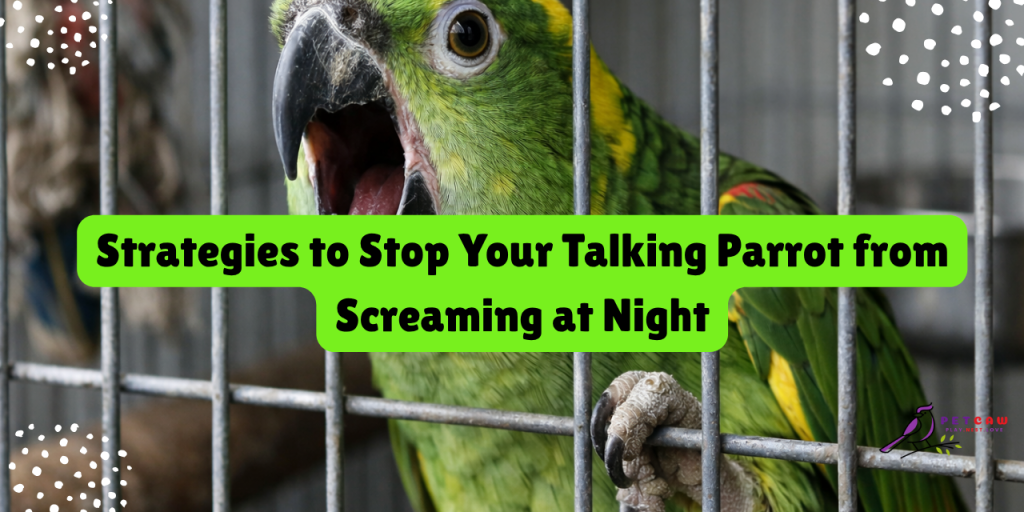
If you’re struggling with a bird that won’t stop screaming at night, you aren’t just losing sleep—you’re dealing with a complex avian behavioral problem. Whether it’s a contact call, separation anxiety, or a reaction to visual stimuli, your parrot’s noise is a data point. Most owners accidentally act as a positive reinforcer, but I’m going to show you how to use differential reinforcement and foraging enrichment to quiet the chaos. From adjusting the circadian rhythm to mastering target training, this is the definitive guide to the fastest way to quiet a parrot and reclaim your peace.
1. Understanding the “Why”: The Behavioral Science Behind Parrot Noise
First, you must realize that behavior always has function. If your parrot is vocalizing, it’s because it “works” for them. Are they screaming for attention? Is it a contact call to ensure the flock (you) is safe? Or is it a reaction to a stimulus?
Parrots are prey animals; their biology is hardwired to communicate through sound. In the wild, they use sentinel behavior to alert others to danger. Understanding the antecedents and consequences (what happens before and after the scream) is the first step toward a quieter home.
2. Common Triggers: Why Your Parrot Won’t Stop Screaming
we need to answer the questions users ask their AI assistants. “Why does my parrot scream when I leave the room?” or “What to do when my bird has night terrors?” Usually, it’s one of these:
- Visual Stimuli: Sudden movements, shadows, or a window view that triggers an alarm call.
- Environmental Noise: A passing car or a humming refrigerator.
- Separation Anxiety: They can’t see you, so they are “calling” to find you.
- Lack of Sleep: Parrots need 10–12 hours of dark, uninterrupted rest to maintain their circadian rhythm.
3. The “Reinforcement Audit”: Are You Accidentally Encouraging the Noise?
Here is a hard truth: You might be the positive reinforcer. If your parrot screams and you run into the room to say “Be quiet!”, you just gave them exactly what they wanted: Social attention.
Even negative attention is still attention. To stop bird squawking, you must apply differential reinforcement. This means you must become a master of “ignoring the screaming” while rewarding the silence. Consistency is everything—don’t even shoot your partner a look when the bird starts up.
4. The “Reinforcer Bucket” Strategy: Building a Bond That Rewards Quiet
Don’t just ignore the bad; you have to catch him being good. We use a “Reinforcer Bucket”—a mental list of things your bird loves (almonds, head scratches, or specific toys).
- The Strategy: During the day, lavish them with rewards when they are playing quietly or talking.
- The Goal: Build enough “positive equity” so that when night falls, the bird feels secure. This is how you train a sun conure to be quiet or manage any other loud species.
5. Diet and Nutrition: The Hidden Link Between Food and Screaming
Does parrot diet affect noise levels? Absolutely. High-sugar diets (too much fruit or sunflower seeds) create “energy spikes” and hormonal triggers. That excess energy often manifests as a screaming fit at 9:00 PM.
Pro Tip: Transition to a high-quality pellet-based diet. Save the high-energy treats for target training and morning sessions. This regulates their energy and their circadian rhythm.
6. Environmental Design: Creating a “Low-Stress” Secondary Space
If your parrot’s main cage is in a high-traffic area, they may never reach deep sleep, leading to irritability.
- The “Sleep Cage”: Consider a smaller, secondary sleep cage in a dedicated “quiet room.”
- Darkness Matters: Use a heavy, breathable blackout cover to block out visual stimuli. This signals to the bird’s brain that the “social day” is officially over.
7. Interactive Play and Exercise: Burning Off “Vocal Energy”
A tired parrot is a quiet parrot. How long should a parrot be out of its cage daily? Also Bird Cage Size matters Aim for at least 3–4 hours of out-of-cage time.
- Foraging Enrichment: Use foraging toys to force them to “work” for their food. A bird cannot scream while it is busy destroying wood or searching for seeds.
- Flight/Movement: If you have the space, an outdoor aviary provides natural light and exercise that calms the nervous system.
8. Step-by-Step Training Checklist: From Constant Squawking to Calm
For your article to get picked up as a Featured Snippet, follow this exact parrot behavior training checklist:
- Identify the Trigger: Is it a light? A sound?
- Remove the Reward: Stop entering the room when they scream.
- Establish a Routine: Same bedtime, every single night.
- Use a “Bridge” Sound: A soft “Goodnight” or a clicker can act as a signal that interaction is ending.
- Reinforce the Alternatives: Reward talking, playing, or quiet chewing immediately with a cheerful “Yes!”
9. Troubleshooting Real-Life Scenarios: When “Ignoring It” Fails
If you are looking for apartment-friendly parrots or trying to keep your current bird quiet for the neighbors, you need tactical solutions:
- White Noise Machines: These are game-changers for noise reduction. They mask the “bump in the night” sounds.
- Soundproofing: Use thick curtains or acoustic foam to dampen the decibels.
- Professional Help: If you suspect weaning trauma, consult an avian behavioral expert.
Frequently Asked Questions (FAQ)
Q1: Why does my parrot scream when I leave the room?
A: This is typically a contact call. In the wild, parrots scream to locate their flock. In your home, they are trying to verify your location. To stop this, use differential reinforcement: ignore the scream and only re-enter or respond when the bird is quiet or making a pleasant “bridge” sound.
Q2: What is the fastest way to quiet a parrot at night?
A: The fastest method is environmental modification. Move the bird to a secondary sleep cage in a quiet, dark room and use a white noise machine to mask external sounds. Ensure they get a full 10–12 hours of sleep to regulate their circadian rhythm.
Q3: Can diet really affect how much my parrot screams?
A: Yes. Diets high in fats and simple sugars (like sunflower seeds and honey sticks) cause energy spikes and can trigger hormonal behavior. Transitioning to a high-quality pellet diet can significantly reduce “vocal energy” outbursts.
Q4: Should I cover my parrot’s cage to stop the screaming?
A: Covering the cage helps signal bedtime, but if the bird continues to scream under the cover, do not respond. Any reaction acts as a positive reinforcer, teaching the bird that screaming still gets your attention even in the dark.
Q5: How long should a parrot be out of its cage daily?
A: For a healthy, quiet bird, aim for 3–4 hours of out-of-cage time daily. This allows them to burn off energy through flight and interactive play, making them more likely to rest quietly at night.
10. Summary: Your Path to a Quiet Bird and a Stronger Bond
Stopping night-time screaming isn’t about “fixing” a bird; it’s about environment and social structure. When you align their biological needs with stationing and target training, the screaming stops. You get the behavior you reinforce, not the behavior you want.
Ready to take your parrot training to the next level? Drop a comment below with your biggest struggle, and let’s solve it together!
About The Author


