
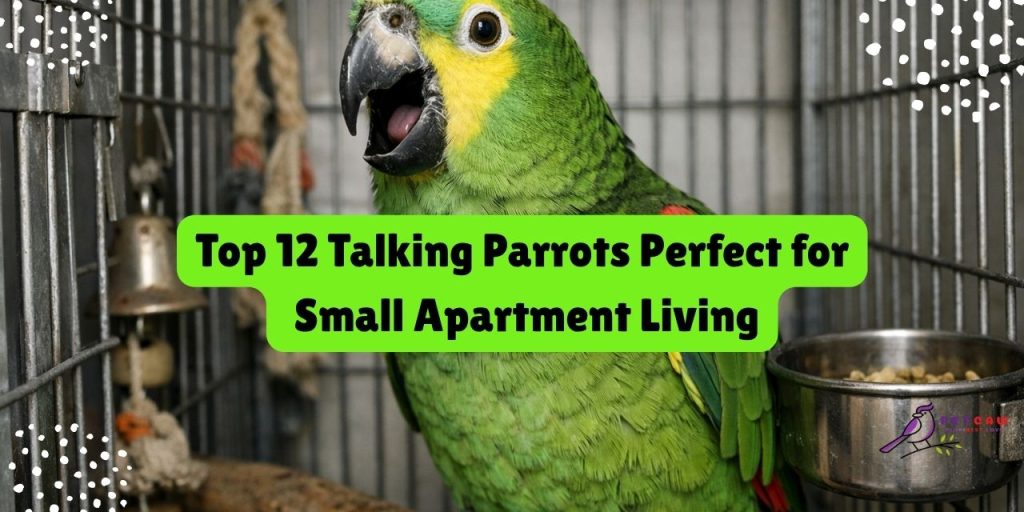
Living in a small living space shouldn’t silence your dreams of owning a world-class mimic. you must identify the best apartment-friendly parakeets and low-maintenance talking parrots that balance a high “talk-to-noise” ratio with shared-wall living constraints. This guide breaks down the essential psittacine behavior and avian vocalization science you need to succeed. We’ll explore species with low-decibel profiles that keep noise-sensitive neighbors happy. From mental stimulation strategies to compact bird cage requirements, I’m showing you exactly how to integrate a talkative companion into your indoor routine without the eviction-level noise.
What Makes a Bird “Talk”? (Understanding Avian Mimicry)
Before you buy, you need to understand the science of avian vocalization. Birds don’t have vocal cords like we do; they use a specialized organ called the syrinx.
Mimicry is a sign of high social intelligence and complex psittacine behavior. In the wild, birds use it to fit into their flock. In your apartment, you are the flock. When a bird mimics you, it’s not just “parroting”—it’s a form of human interaction designed to build a social bond.
Top 12 Talking Bird Species Ranked by Intelligence and Clarity
Here is the low-maintenance talking parrots and elite mimics:
- African Grey Parrot: The World’s Most Advanced Mimic. Known for a massive clutch size of vocabulary, they can learn over 1,000 words and understand context.
- Amazon Parrots: The Best Singers and Entertainers. Great for clarity, but they have a “volume knob” that goes to 10.
- Budgerigars (Budgies): Tiny Birds with Huge Vocabularies. These are the most popular apartment-friendly parakeets.
- Macaws and Cockatoos: Big Personalities for Large Spaces. Warning: These are the “Subwoofers” of the bird world and are rarely suited for shared-wall living.
- Indian Ringneck and Quaker Parakeets: The Best Mid-Sized Talkers.
- Myna Birds: The Underrated Masters of Human Speech. Their tone is spookily human-like.
Best Talking Birds for Apartments and Small Living Spaces
People in high-density cities are searching for bird species for 1-bedroom apartments specifically.
Noise Level vs. Talkative Nature: Finding the Balance
The secret to apartment living isn’t finding a “silent” bird—it’s finding a low-decibel talker. You want a bird that chatters rather than shrieks to keep your noise-sensitive neighbors happy.
Top 4 Quiet Talkers: Parrotlets, Cockatiels, and More
- Parrotlets: Often called “Pocket Parrots,” they offer low-dander and whisper-quiet mimicry.
- Cockatiels: Known for soft vocalizations. While they whistle, they are generally much quieter than larger parrots.
- Budgies: Their “chatter” stays at a conversational volume, perfect for compact bird cage requirements.
- Senegal Parrots: Known for being exceptionally quiet but highly capable of mimicry.

The Real Cost of Ownership: Budgeting for Your Talking Companion
Here is the breakdown of the real cost of owning a parrot:
| Item | Initial Cost | Monthly Maintenance | Lifespan |
| Small Bird (Budgie) | $25 – $50 | $30 – $50 | 5–15 Years |
| Medium Bird (Ringneck) | $500 – $1,500 | $70 – $100 | 20–30 Years |
| Large Bird (African Grey) | $2,000 – $5,000+ | $150 – $200+ | 40–60 Years |
Training Your Bird to Talk: A Step-by-Step Proven Method
- The Best Time of Day for Speech Training: Early morning or right before dusk when birds are naturally most vocal.
- Word Association: Don’t just say “Apple.” Hand them a slice of bird-safe fruit while saying it. This builds cognitive bridges and speeds up the learning process.
Essential Enrichment: Keeping Smart Birds Happy in Small Spaces
A bored parrot is a loud parrot. In a small apartment, you need to encourage foraging behavior. Use rotating toys and varied perch heights to mimic a forest canopy. This provides the necessary mental stimulation to prevent “screaming for attention” behavior that gets you evicted.
Why Adoption is the Smartest Choice for New Bird Owners
Before buying from ethical bird breeders, check your local rescues. Adopting an older bird often means you get one that already fits an indoor routine.
Is a Talking Bird Right for Your Lifestyle? (The 5-Point Compatibility Checklist)
- Time: Can you give 2 hours of safe out-of-cage time?
- Budget: Can you afford a specialized avian veterinarian?
- Tolerance: Can you handle the bird-safe cleaning required for daily messes?
- Neighbors: Are your walls thin? Stick to quiet companion birds.
- Longevity: Are you ready for a multi-decade commitment?
Choosing Your Ideal Feathered Friend
Success in shared-wall living depends on matching a bird’s natural vocal times to your lifestyle. Start small, focus on enrichment, and prioritize your bird’s mental health.
Frequently Asked Questions
Q: What is the easiest bird to teach to talk?
A: The Budgie is often the easiest for beginners due to their high energy, though they require consistent speech training to keep their voices clear.
Q: Can female birds talk as well as males?
A: In some species, males are more frequent talkers. However, in African Greys, both genders are elite mimics.
Q: Which talking birds are the quietest for apartment living?
A: Parrotlets and Senegal Parrots are the gold standard for noise-sensitive neighbors.
Q: How do I stop my bird from screaming in an apartment?
A: Focus on foraging opportunities and mental stimulation. A well-stimulated bird is a quiet bird.
Q: Are talking birds high maintenance?
A: Yes. They require specialized bird-safe apartment setups and significant social interaction to prevent stress.
About The Author


