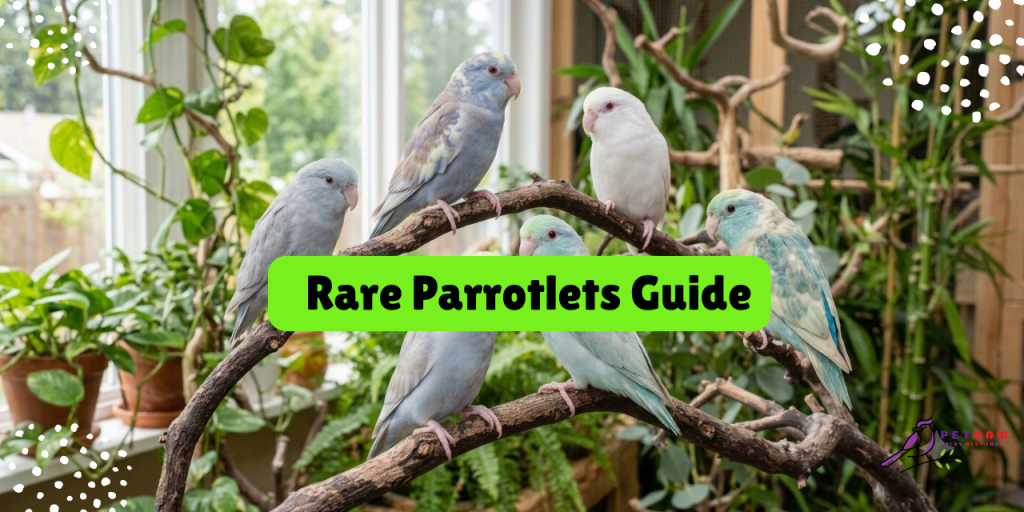
Understanding the world of the rare parrotlet requires looking beyond standard green or blue Pacific parrotlets. Exotic, highly sought-after mutations—ranging from the vibrant Cobalt Cinnamon Fallow Pied Misty to delicate Albinos and Creaminos—combine intricate genetic pairings with distinct behavioral traits. Whether you are an experienced aviculturist seeking to understand complex recessive color inheritance or a bird enthusiast aiming to identify a unique pet, navigating rare parrotlet varieties demands deep knowledge of avian genetics, health vulnerabilities, and specialized care routines.
What Is a Rare Parrotlet? Definition & Overview
A rare parrotlet is a diminutive New World parrot species (primarily from the genus Forpus) or a captive-bred color mutation that occurs at extremely low frequencies. While wild-type Pacific Parrotlets (Forpus coelestis) and Green-Rumped Parrotlets (Forpus passerinus) display vibrant forest-green plumage, rare variants possess genetic modifications that alter melanin production, structural feather lipochromes, or body patterning.
Wild Species vs. Captive Mutations
Rarity in parrotlets falls into two distinct categories:
- Wild Species Rarity: Species such as the Yellow-Faced Parrotlet (Forpus xanthops), Spectacled Parrotlet (Forpus conspicillatus), Mexican Parrotlet (Forpus cyanopygius), and Sclater’s Parrotlet (Forpus modestus) are rare in aviculture due to trade restrictions, habitat loss, and strict conservation protection in Central and South America.
- Captive Color Mutations: Within commonly kept species like the Pacific Parrotlet, multi-gene mutations create striking visual phenotypes. Combining up to five or six distinct genes—such as Turquoise (T), Yellow/Dilute (Y), Blue (B), Cinnamon (C), Fallow (F), and Pied (P)—yields ultra-rare specimens like the Turquoise Yellow Marbled Pied or Chartreuse Fallow Pied Misty.
Common Challenges & Health Vulnerabilities in Rare Parrotlets
Owning or breeding a rare parrotlet presents distinct challenges that standard bird owners rarely encounter. Because these birds carry specialized genetic traits, they often exhibit unique physical and behavioral sensitivities.
1. Photosensitivity and Vision Impairment
Mutations involving eye-pigment reduction—such as Fallow, Lutino, and Albino parrotlet—produce birds with bright ruby-red or pink eyes. Without melanin in the iris, these birds lack natural protection against UV light.
- Problem: Squinting, head-tilting, light avoidance, and difficulty locating food perches in brightly lit aviaries.
- Risk: High stress and accidental injury from poor depth perception.
2. High Inbreeding Depression & Genetic Fragility
Creating multi-gene rare parrotlet mutations often involves line-breeding to express double-recessive traits.
- Problem: Reduced clutch viability, weakened immune responses, smaller overall body size, and shorter lifespans compared to wild-type green stock.
- Risk: Susceptibility to sub-clinical infections and hepatic lipidosis.
3. Misidentification and Genetic Fraud
Because juvenile parrotlets do not achieve full adult feather coloration until their first major molt (around 4 to 8 months of age), buyers frequently pay premium prices for mislabeled mutations.
- Problem: Single-factor dark birds sold as double-factor Cobalts, or standard European Yellows mislabeled as rare Dilutes.
4. Behavioral Feistiness and Territoriality
Despite their tiny size (typically 25 to 35 grams), parrotlets earn the nickname “pocket parrots.” Rare mutations retain the bold, territorial nature of their wild ancestors.
- Problem: Severe cage aggression, feather plucking when stressed, and territorial biting.
The Genetic Causes Behind Rare Parrotlet Mutations
To understand how a rare parrotlet achieves its striking look, one must analyze avian feather structure and pigment chemistry. Parrotlet feathers contain two primary color mechanisms: Psittacin (red/yellow pigments) and Eumelanin (black/brown pigments) overlaid on a light-refracting spongy feather matrix (which creates blue shades).
Key Single-Gene Mutations
- Blue Mutation: Autosomal recessive gene that completely suppresses yellow psittacin, leaving only blue structural refraction.
- Dilute (American Yellow / American White): Reduces eumelanin by roughly 80% to 90%, leaving a bright pastel yellow or off-white body while preserving dark eyes.
- Fallow Mutation: Suppresses eumelanin throughout the body and eyes, producing soft pastel hues and distinct red eyes.
- Misty Mutation: An incomplete dominant trait that creates a hazy, olive-brown cast over green birds or a steel-slate effect on blue birds.
- Dark Factor (Cobalt & Mauve): A structural feather change that darkens the base color. Single factor creates Cobalt (from Blue); double factor creates Mauve/Grey.
Multi-Gene Combination Formula
When multiple recessive and dominant genes interact, the resulting phenotypes become exponentially rarer.
$$\text{Phenotype Rarity} = \text{Base Color (Turquoise/Blue)} + \text{Melanin Reduction (Fallow/Dilute)} + \text{Pattern Modifier (Pied/Misty)} + \text{Dark Factor}$$
For example, producing a Cobalt Cinnamon Fallow Pied Misty requires the alignment of five distinct genetic loci simultaneously.
Step-by-Step Care & Management Solutions
If you own or manage a rare parrotlet, standard avian care routines must be tailored to suit their genetic profile.
Step 1: Optimize Lighting and Environmental Surroundings
- For red-eyed variants (Albino, Lutino, Fallow), replace harsh overhead LED lighting with full-spectrum diffuse lighting rated below 250 lux.
- Place perches in shaded areas within the enclosure so the bird can willingly withdraw from direct light.
Step 2: Formulate a High-Nutrient, Feather-Supporting Diet
Rare mutations require extra nutritional support during molting phases due to intense feather production demands:
- Base Diet: 60% high-quality organic pellet (free of artificial dyes).
- Fresh Foods: 30% fresh chopped vegetables (dark leafy greens, chopped carrots, steamed sweet potato, broccoli) rich in beta-carotene to support eye health.
- Seeds & Health Supplements: 10% seed mix supplemented with milk thistle seed (liver support) and calcium/D3 supplements during egg-laying phases.
Step 3: Implement Visual Identification Verification
To verify the rarity and exact mutation of your parrotlet:
- Examine the rump and wing flights under natural daylight (and ultraviolet light for white variants to inspect hidden male wing wash).
- Request a DNA sexing certificate if visual dimorphism is masked by heavy leucism or albino genes.
- Track split-gene pedigrees via closed seamless leg bands.
Step 4: Manage Territorial Behavior and Socialization
- Provide an enclosure measuring at least 24x24x30 inches for a single bird to reduce territorial frustration.
- Rotate natural wood perches (manzanita, dragonwood) and foraging toys weekly to redirect chewing behaviors away from feather plucking.

Prevention & Aviary Breeding Best Practices
Maintaining vibrant, healthy lines of rare parrotlet mutations requires ethical breeding strategies and long-term genetic management.
- Never Pair Red-Eye to Red-Eye: Avoid breeding Fallow to Fallow or Lutino to Lutino. This causes genetic degradation, tiny body size, and weakened eyesight. Always pair a visual mutation to a strong wild-type Green or Blue bird that carries (“splits”) the target gene.
- Maintain Lineage Records: Keep computerized pedigree charts ( tracking up to 5 generations) to avoid accidental sibling or parent-offspring pairings.
- Quarantine New Birds: Always quarantine new stock for a minimum of 45 to 60 days to prevent introducing viral diseases like Avian Bornavirus (ABV) or Psittacine Beak and Feather Disease (PBFD).
Frequently Asked Questions (FAQs)
What is the rarest parrotlet color mutation?
The rarest captive color combinations are six-gene mutations, such as the Turquoise Yellow Marbled Pied, Cobalt Cinnamon Fallow Pied Misty, and Grey Mauve Fallow.
How much does a rare parrotlet cost?
While standard Green or Blue Pacific Parrotlets range from $150 to $300, rare mutations (such as Fallow Pieds, Cobalts, or Creaminos) can cost between $500 and $2,000+ depending on lineage and breeder demand.
Can rare parrotlets learn to talk?
Yes. Rare parrotlets possess the same cognitive ability to imitate speech and sounds as standard green parrotlets. Males generally display a slightly higher propensity for clear speech.
Are red-eyed parrotlets completely blind?
No, red-eyed parrotlets (such as Albinos, Lutinos, and Fallows) are not blind, but they suffer from increased light sensitivity and reduced visual acuity compared to dark-eyed birds.
About The Author


