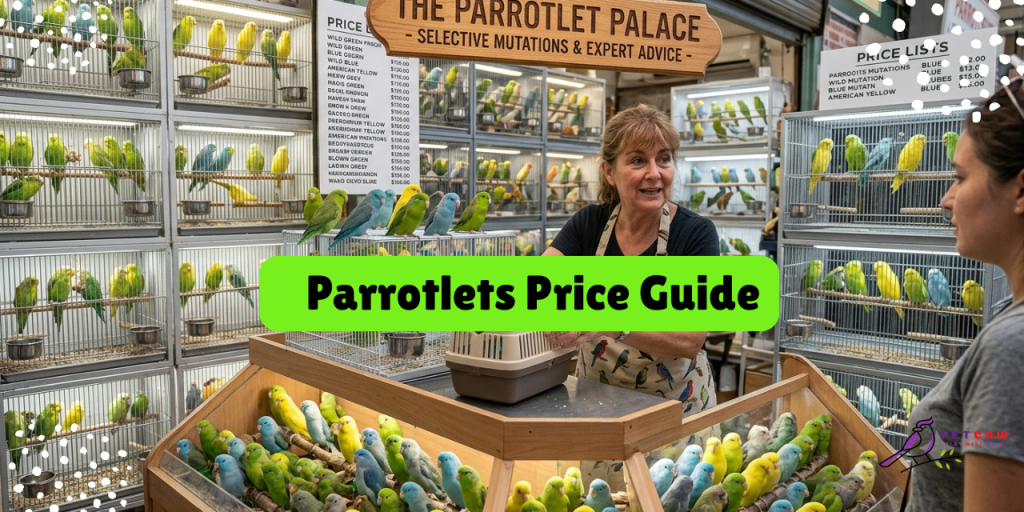
When planning to welcome a pocket-sized avian companion into your home, understanding the true parrotlet price involves looking far beyond the initial adoption sticker tag. Known as “big parrots in tiny bodies,” Pacific and Green-Rump parrotlets offer the charm, intelligence, and personality of large parrots like Amazons or Macaws in a compact 30-gram frame.
The baseline parrotlet price for a bird ranges between $150 and $1,200 USD, depending heavily on the species, regional availability, breeder reputation, and—most significantly—rare color mutations. However, purchasing the bird represents only a fraction of the total investment. Between essential enclosure setups, high-nutrition pellet diets, destructive foraging toys, and specialized avian veterinary checkups, the first-year cost typically averages $800 to $1,800, with recurring annual expenses settling around $300 to $600.
Whether you are evaluating standard Green Pacific parrotlets or rare Dark Factor Marble mutations, this guide breaks down every upfront, hidden, and lifetime cost associated with owning a parrotlet.
1. Parrotlet Price Overview: Species & Color Mutation Cost Matrix
The upfront purchase price of a parrotlet varies dramatically based on genetics. Wild-type green birds are the most common and accessible, while selectively bred mutations command premium prices from aviculturists.
| Species / Mutation | Visual Description | Average Price Range (USD) |
| Pacific Parrotlet (Wild Green) | Classic bright green body, pink beak, blue eye/wing accents (males) | $150 – $300 |
| Pacific Parrotlet (Blue) | Powder blue to sky blue plumage with dark eyes | $250 – $400 |
| Pacific Parrotlet (American Yellow / Dilute) | Vibrant soft yellow-green with dark eyes | $300 – $450 |
| Pacific Parrotlet (American White / Dilute Blue) | Soft white with delicate ice-blue tones | $350 – $500 |
| Pacific Parrotlet (Lutino) | Bright canary yellow body with ruby-red eyes | $400 – $600 |
| Pacific Parrotlet (Albino) | Pure white body with striking ruby-red eyes | $450 – $650 |
| Pacific Parrotlet (Fallow / Cinnamon) | Beige-green hue with ruby-red eyes | $500 – $800 |
| Pacific Parrotlet (Pied / Marbled) | Mottled patches of yellow/white intermixed with green/blue | $400 – $750 |
| Pacific Parrotlet (Dark Factor / Slate / Mauve) | Deep olive, graphite grey, or dark smoky charcoal tones | $600 – $1,200+ |
| Green-Rumped Parrotlet (Forpus passerinus) | Slightly smaller, bright apple-green, gentler disposition | $200 – $400 |
| Spectacled / Mexican Parrotlet | Rare wild-type import lines; restricted in pet trade | $400 – $800+ |
2. Factors Driving the Purchase Price of a Parrotlet
Why do two birds of identical size have a price difference of $800 or more? Key biological, geographic, and market variables dictate the final sticker price.
A. Genetic Rarity & Color Mutation Stacking
Standard green parrotlets inherit natural wild pigmentation. Color mutations require generations of controlled selective breeding to establish recessive or double-dark-factor traits. When breeders combine multiple recessive traits—such as a Marbled Fallow Blue—the probability of producing visual offspring drops significantly, driving the market value into higher tiers.
B. Hand-Feeding and Early Socialization
- Parent-Raised Birds ($150 – $250): Raised entirely by parent birds with minimal human contact. These birds require extensive time and patience to hand-tame.
- Hand-Fed & Socialized Birds ($300 – $800+): Hand-pulled from the nest box at 2–3 weeks of age and hand-fed with syringes until fully weaned. These chicks interact with humans daily, resulting in tame, confident companions ready for handling immediately upon arrival.
C. Additional Breeder Inclusions
Reputable aviculturists often include services that increase the base purchase price but save money on post-adoption vet visits:
- DNA Sexing Certificate: Visual sexing can be tricky in certain pale or white mutations. Professional DNA blood or feather testing adds $20–$35 to the cost.
- Disease Testing: Panels screening for Avian Bornavirus (ABV), Psittacine Beak and Feather Disease (PBFD), and Chlamydia add $100–$200 in baseline value.
- Closed Leg Bands: Seamless aluminum leg bands verify hatch year, breeder registry code, and origin traceable records.
3. Initial Setup Costs: Housing & Essential Gear
Before bringing your parrotlet home, you must prepare a safe, stimulating enclosure. Cutting corners on safety items (like incorrect bar spacing) can lead to severe injury or escape.
| Item Category | Recommended Specifications | Estimated Cost (USD) |
| Flight Cage | Min. 24″ W × 24″ D × 24″ H; Bar spacing strictly 1/2″ or less | $100 – $250 |
| Perch Variety (4–6 perches) | Manzanita, Dragonwood, rope, and pumice perches (avoid smooth uniform plastic/dowel) | $30 – $60 |
| Foraging & Shredding Toys | Sola wood, woven palm leaves, crinkle paper, leather strips, stainless bells | $40 – $80 |
| Food & Water Dishes | Heavy-duty stainless steel lock-crocks (prevents tipping and bacterial growth) | $15 – $30 |
| Avian Full-Spectrum Light | 2.4% UVB bulb + fixture with timer to support Vitamin D3 synthesis and plumage health | $50 – $90 |
| Travel Carrier | Small hard-sided or acrylic travel cage for vet visits and emergency evacuation | $25 – $50 |
| Cage Liner / Paper Bedding | Unprinted butcher paper or specialized cage liners | $15 – $25 |
| Gram Scale | Digital kitchen scale ($0.1\text{g}$ accuracy) for daily weight monitoring | $15 – $25 |
| TOTAL INITIAL SETUP | First-time non-bird supplies | $290 – $610 |
4. Ongoing & Recurring Lifetime Care Expenses
Beyond purchase and setup, budgeting for monthly and annual care ensures your parrotlet maintains peak physical health over a 12 to 20-year parrotlet lifespan.
- $180 – $360 / Year: Premium Pellets & Fresh Chop
- $120 – $240 / Year: Toy Replacements & Shreddables
- $150 – $300 / Year: Annual Avian Vet Checkup & Fecal Exam
- $50 – $100 / Year: Cage Cleaning Supplies & Liners
A. Nutrition & Diet ($15 – $30 / Month)
An all-seed diet causes fatty liver disease and severe malnutrition. A balanced parrotlet diet consists of:
- Organic Formulated Pellets (60–70%): Cold-pressed or organic mini-pellets ($15–$25 per bag).
- Fresh Vegetable Chop (20–30%): Daily fresh leafy greens, sweet potatoes, peppers, and broccoli ($10–$15 per month).
- Seed & Millet Mix (5–10%): Reserved exclusively as rewards during positive-reinforcement training.
B. Toy Destructibility & Enrichment ($10 – $20 / Month)
Parrotlets possess high intelligence and strong beak drives. They chew through wooden and paper toys quickly. Replacing shredded toys monthly is mandatory to prevent boredom, plucking, and excessive vocalizing.
C. Avian Veterinary Care ($150 – $300+ / Year)
Standard cat and dog veterinarians are not qualified to treat exotic birds. Specialized avian vet visits cost slightly more:
- Annual Well-Bird Exam: Physical examination, choanal swab, and gram stain ($100 – $180).
- Baseline Diagnostic Bloodwork: CBC and chemistry panels ($100 – $200).
- Emergency Vet Reserve Fund: Avian emergency care (e.g., egg binding, night fright injuries) can easily range from $500 to $1,500+. Maintaining a pet insurance plan or dedicated savings cushion is recommended.
5. Potential Pitfalls: Hidden Costs & Common Financial Mistakes
First-time bird owners often encounter unexpected expenses caused by household hazards or improper initial purchases.
1. Replacing Toxic Household Items
- PTFE / Teflon Cookware: Non-stick cookware releases odorless, lethal gases when heated. Replacing non-stick pans with stainless steel, ceramic, or cast iron costs $100 – $300.
- Air Purifiers: Parrotlets have delicate respiratory systems. A true HEPA air purifier (without ozone features) costs $80 – $200.
2. Buying Inappropriate Cages
Purchasing cheap cages with wider bar spacing ($>1/2″$) risks severe head entrapment or escape. Replacing a poor cage doubles housing expenses over time.
6. Step-by-Step Financial Planning Guide for Adoption
Follow this structured action plan to budget for your parrotlet responsibly:
- Calculate Baseline Initial Budget: Ensure you have at least $700 to $1,000 saved prior to adoption to cover the bird, housing setup, and immediate initial vet exam.
- Choose Adoption vs. Breeder Purchase:
- Rescue/Shelter Adoption ($50 – $150): Adoption fees are significantly lower, and rescued birds often come with cage accessories or discounted vet checks.
- Reputable Avian Breeder ($200 – $800): Ensures known hatch dates, early socialization, and health guarantees.
- Set Up the Enclosure Before Arrival: Assemble the flight cage, place varied branch perches, install full-spectrum lighting, and test food crock placements 24–48 hours before bringing the bird home.

7. Frequently Asked Questions (FAQs)
Q1: Is a parrotlet cheaper to keep than a large parrot?
Answer: Yes, significantly. While their personality is comparable to larger parrots, their smaller size means they consume far less food, require smaller cages, and destroy less expensive toys. While a Macaw or Cockatoo can cost $1,500–$3,000+ annually in care, a parrotlet averages $300–$600 per year.
Q2: Why are rare color mutation parrotlets so expensive?
Answer: Mutations like Slate, Dark Factor, Lutino, and Albino require multiple generations of deliberate, highly controlled breeding lines. Because the genetics behind double recessive or dark factor traits are complex, breeders produce far fewer visual mutation chicks per clutch.
Q3: How much does it cost to ship a parrotlet if bought online?
Answer: Shipping a live bird via certified avian air cargo typically costs between $150 and $250, which includes climate-controlled transit and an approved travel crate. Whenever possible, local breeder pickup or shelter adoption eliminates this expense.
Q4: Are female parrotlets cheaper than male parrotlets?
Answer: Generally, no. Most breeders charge identical prices for males and females of the same color mutation. However, in mutations where males show brighter, distinct blue markings (such as Pacific Blues or American Whites), some buyers place higher demand on males, occasionally leading to slight price variations.
Key Takeaways
- Base Bird Purchase: $150 – $1,200 (Mutation dependent)
- Cage & Initial Supplies: $290 – $610
- First-Year Total Cost: $800 – $1,800
- Ongoing Monthly Expense: $30 – $50
- Lifetime Investment (15 Years): $5,000 – $9,000
Deciding to bring a parrotlet into your home is an investment of both love and financial resources. By accounting for initial supply costs, veterinary reserves, and monthly enrichment, you can ensure your companion enjoys a healthy, enriched life.
About The Author


