A healthy parrot diet is one of the most important factors in determining your bird’s lifespan, talking ability, feather quality, energy levels, immune strength, and long-term health.
Many parrots survive on seed-heavy diets, but surviving is not the same as thriving. A balanced parrot diet supports better vocalization, healthier feathers, stronger immunity, and a longer lifespan. Modern avian nutrition research shows that parrots need a varied, nutrient-rich diet that supports the immune system, brain function, digestive health, and the syrinx — the vocal organ responsible for birds speech and sound production.
If you want a parrot that remains active, social, intelligent, and vocal for decades, nutrition must become a daily priority.
In this expert guide, you’ll learn:
- What parrots should eat every day
- The best foods for parrots recommended by avian nutrition experts
- Why pellets are healthier than seed-only diets
- The best vegetables, fruits, grains, and proteins
- Toxic foods you must avoid
- How diet affects talking and vocalization
- Feeding schedules and portion recommendations
- How to create homemade “chop” meals
- Common nutritional mistakes bird owners make
Why Proper Parrot Nutrition Matters for Health, Lifespan, and Talking Ability
Parrots are highly intelligent, long-lived birds with complex dietary needs.
In the wild, parrots consume:
- Seeds
- Fruits
- Blossoms
- Bark
- Nuts
- Vegetation
- Legumes
- Insects
- Mineral-rich clay
Wild parrots spend much of their day foraging, chewing, climbing, and exploring food sources.
Captive parrots that receive repetitive diets often develop:
- Obesity
- Vitamin deficiencies
- Feather destruction
- Low energy
- Aggression
- Excessive screaming
- Reduced vocalization
- Fatty liver disease
- Weak immune systems
A balanced parrot diet supports:
- Brain function
- Healthy vocalization and talking ability
- Vocal learning
- Feather growth
- Healthy molting
- Joint health
- Digestive function
- Longevity
- Emotional wellbeing
Can Diet Affect a Parrot’s Ability to Talk?
Yes.
Nutrition directly impacts neurological health, respiratory efficiency, muscle function, and energy metabolism.
Parrots rely on the syrinx and respiratory system to produce vocalizations. Deficiencies in Vitamin A, calcium, essential fatty acids, and amino acids can contribute to:
- Weak vocalization
- Reduced mimicry
- Lower activity levels
- Lethargy
- Respiratory irritation
- Poor cognitive stimulation
Birds receiving balanced diets combined with enrichment and social interaction are often more engaged, responsive, and vocal.
While no food can “teach” a parrot to talk, proper nutrition supports the physical and neurological systems required for communication.
Pellets vs Seeds: What Is the Best Diet for Parrots?
Are Seeds Bad for Parrots?
Seeds are not inherently toxic, but seed-only diets are one of the leading causes of malnutrition in captive parrots.
Most commercial seed mixes are:
- High in fat
- Low in calcium
- Deficient in Vitamin A
- Nutritionally imbalanced
- Calorie-dense but nutrient-poor
Excessive seed consumption can contribute to:
- Hepatic lipidosis (fatty liver disease)
- Obesity
- Vitamin deficiencies
- Poor feather condition
- Hormonal problems
- Reduced lifespan
Seeds should be treated more like treats than complete meals.
Why Veterinarians Recommend Pellets
High-quality formulated pellets are designed to provide balanced nutrition.
Pellets contain:
- Essential vitamins
- Amino acids
- Balanced minerals
- Controlled fat levels
- Consistent nutrient profiles
Most avian veterinarians recommend:
- 60–80% high-quality formulated pellets
- 20–40% fresh vegetables, grains, legumes, and healthy treats
- 20–40% fresh vegetables, grains, and healthy treats
The exact ratio depends on species, age, activity level, and medical history.
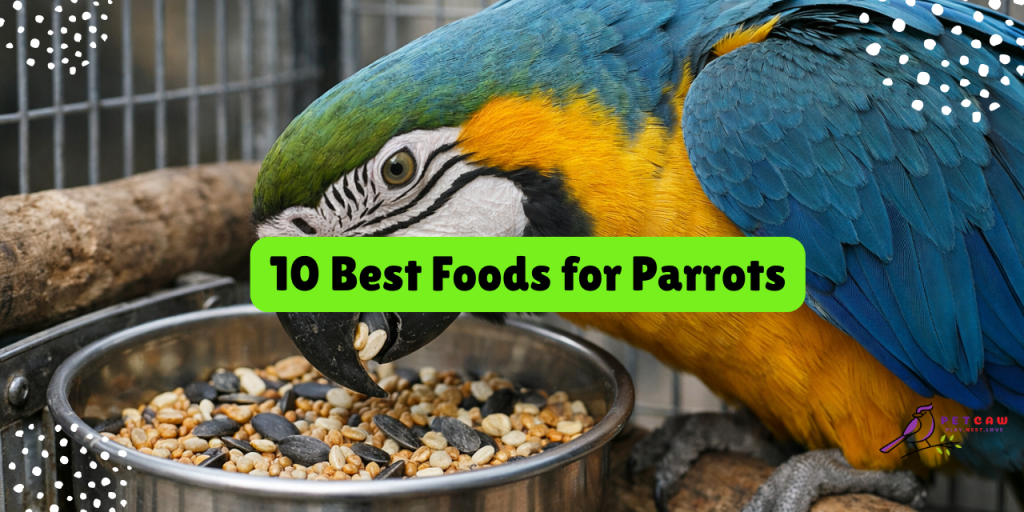
10 Best Foods for Parrots
1. Sweet Potatoes
Sweet potatoes are rich in beta-carotene, which converts into Vitamin A.
Benefits include:
- Respiratory support
- Immune function
- Healthy skin and feathers
- Syrinx support
- Eye health
Serve cooked and cooled. Read more for Can Parrot eat raw sweet potatoes
2. Blueberries
Blueberries contain antioxidants and anthocyanins that support brain health.
Benefits:
- Cognitive support
- Reduced oxidative stress
- Healthy aging
- Neurological protection
Use in moderation due to natural sugars.
3. Kale and Dark Leafy Greens
Kale, collard greens, mustard greens, and bok choy are excellent calcium sources.
Benefits:
- Bone strength
- Muscle contraction
- Nerve signaling
- Egg-laying support
- Prevention of metabolic bone disease

4. Bell Peppers
Bell peppers are extremely high in Vitamin C and antioxidants.
Red peppers also contain carotenoids that support immune health.
Most parrots enjoy crunchy textures and bright colors.
5. Carrots
Carrots support:
- Vision
- Immune health
- Feather quality
- Skin integrity
Shredded carrots work well in homemade chop mixes.
6. Papaya
Papaya contains digestive enzymes and hydration-supporting nutrients.
Benefits include:
- Digestive support
- Hydration
- Immune support
- Antioxidant intake
Remove seeds before serving.
7. Quinoa
Quinoa is a complete protein source containing all essential amino acids.
Benefits:
- Muscle maintenance
- Feather production
- Energy metabolism
- Vocal muscle support
Always cook quinoa before feeding.
8. Chickpeas and Lentils
Legumes provide:
- Fiber
- Protein
- Iron
- Slow-burning energy
Cook thoroughly before serving.
9. Broccoli
Broccoli supports:
- Detoxification
- Fiber intake
- Vitamin A levels
- Digestive health
Serve raw or lightly steamed.
10. Walnuts
Walnuts contain healthy fats and omega-3 fatty acids.
Benefits include:
- Brain health
- Cognitive support
- Skin health
- Anti-inflammatory properties
Because nuts are calorie-dense, use them primarily for training rewards.
7 Toxic Foods You Should Never Feed Your Parrot
Some human foods are dangerous or fatal to parrots.
Never Feed These Foods
Avocado
Contains persin, which can cause heart failure in birds.
Chocolate
Contains theobromine and caffeine, both toxic to parrots.
Caffeine
Can trigger:
- Rapid heartbeat
- Hyperactivity
- Seizures
- Cardiac distress
Onion and Garlic
Large amounts may contribute to hemolytic anemia.
Apple Seeds and Fruit Pits
Contain cyanogenic compounds.
Xylitol
This artificial sweetener can be fatal.
Salty and Fried Foods
Bird kidneys cannot efficiently process excessive sodium and unhealthy fats.
Alcohol
Even tiny amounts are dangerous.

How to Make Homemade Parrot Chop
“Chop” is a nutrient-rich mixture of vegetables, grains, and legumes.
It encourages dietary variety while reducing selective eating.
Basic Chop Formula
1 Part Whole Grains
Examples:
- Brown rice
- Quinoa
- Oats
- Barley
2 Parts Legumes
Examples:
- Lentils
- Chickpeas
- Split peas
- Black beans
3 Parts Vegetables and Greens
Examples:
- Kale
- Carrots
- Bell peppers
- Broccoli
- Zucchini
- Spinach
How to Prepare Chop
- Cook grains and legumes fully.
- Finely chop vegetables.
- Mix ingredients evenly.
- Portion into freezer-safe containers.
- Defrost small servings daily.
Avoid adding:
- Salt
- Oil
- Butter
- Seasonings
- Garlic
- Onion
Ideal Parrot Feeding Schedule: Morning vs Evening Nutrition Routine
Consistency improves both nutrition and behavior.
Morning Feeding (7:00–9:00 AM)
Offer fresh vegetables and chop when parrots are naturally hungry.
This increases acceptance of healthy foods.
Midday Feeding
Provide pellets and fresh water.
Remove spoiled fresh foods after several hours.
Evening Feeding and Training
Use healthy treats such as:
- Almonds
- Walnuts
- Sunflower seeds
These can reinforce:
- Step-up training
- Recall training
- Talking practice
- Social interaction
Natural Foraging Behavior: Why Enrichment Improves Talking and Mental Health
Wild parrots spend most of their waking hours searching for food.
Captive birds deprived of enrichment may develop:
- Screaming
- Feather plucking
- Anxiety
- Depression
- Aggression
- Destructive behavior
Foraging activities stimulate:
- Problem-solving
- Curiosity
- Vocalization
- Physical exercise
- Cognitive engagement
Simple Foraging Ideas
- Hide treats in paper cups
- Use cardboard tubes
- Wrap nuts in paper
- Rotate enrichment toys weekly
- Use puzzle feeders
Mentally stimulated parrots are often more interactive and vocal.
Common Signs of Poor Nutrition in Parrots
Watch for:
- Dull feathers
- Flaky beak
- Weight gain
- Weight loss
- Weak vocalization
- Chronic lethargy
- Sneezing
- Reduced activity
- Poor molting
- Aggression
- Excessive sleeping
If symptoms persist, consult an avian veterinarian.
Special Diet Needs by Life Stage
Baby Parrots
Young parrots require:
- Higher protein
- Proper calcium balance
- Controlled hand-feeding formulas
Improper feeding can cause developmental issues.
Breeding Parrots
Breeding birds often require:
- Increased calcium
- Higher energy intake
- Additional protein
- Mineral supplementation
Calcium deficiency may contribute to egg-binding.
Senior Parrots
Older parrots may develop:
- Arthritis
- Reduced mobility
- Slower metabolism
- Liver disease
Senior birds benefit from:
- Anti-inflammatory foods
- Weight management
- Easier-to-chew vegetables
- Regular veterinary monitoring
Step-by-Step Guide: How to Transition a Parrot From Seeds to Pellets
Many parrots resist dietary changes.
Transition gradually.
Step-by-Step Transition Plan
Week 1
Replace 10% of seeds with pellets.
Week 2
Increase pellets to 25%.
Week 3–4
Offer pellets in the morning before seeds.
Week 5+
Aim for a veterinarian-approved balance.
Never starve a bird into eating pellets.
Monitor:
- Weight
- Droppings
- Activity levels
- Appetite
12 Frequently Asked Questions About Parrot Diets and Nutrition
Can a poor diet stop a parrot from talking?
Poor nutrition can reduce energy, neurological health, respiratory function, and overall engagement, all of which may reduce vocal behavior.
Can parrots eat bread?
Small amounts of whole-grain bread are generally safe occasionally, but bread offers limited nutritional value.
What fruits are best for parrots?
Good options include:
- Blueberries
- Papaya
- Mango
- Apples (without seeds)
- Pomegranate
- Melons
Feed fruit in moderation due to sugar content.
Do parrots need supplements?
Healthy parrots eating balanced diets often do not require supplements unless recommended by an avian veterinarian.
Over-supplementation can be harmful.
Should parrots drink from bowls or bottles?
Most parrots prefer bowls because they naturally dunk food while eating.
Water should be changed daily.
How often should parrots eat fresh vegetables?
Fresh vegetables should ideally be offered every day.
Variety is critical for balanced nutrition.
15 Expert Tips to Keep Your Parrot Healthy, Active, and Talkative
- Rotate vegetables weekly to prevent boredom
- Prioritize pellets over seed mixes
- Encourage foraging behavior daily
- Use treats only for training
- Schedule annual avian veterinary exams
- Monitor weight regularly
- Provide fresh water daily
- Avoid processed human foods
- Introduce new foods slowly
- Combine nutrition with social interaction and enrichment
Final Thoughts: Building the Best Parrot Diet for Lifelong Health and Vocal Performance
A healthy parrot diet goes far beyond seeds and treats.
Balanced nutrition supports:
- Longer lifespan
- Better feather quality
- Stronger immunity
- Improved energy
- Healthier behavior
- Enhanced vocalization
- Greater cognitive function
The best diets combine:
- High-quality pellets
- Fresh vegetables
- Healthy grains and legumes
- Safe fruits
- Foraging opportunities
- Consistent feeding routines
Start small.
Even replacing a small percentage of seeds with healthier foods can significantly improve your parrot’s quality of life over time.
With proper nutrition, enrichment, and veterinary care, parrots can remain vibrant, social companions for decades.
About The Author


