
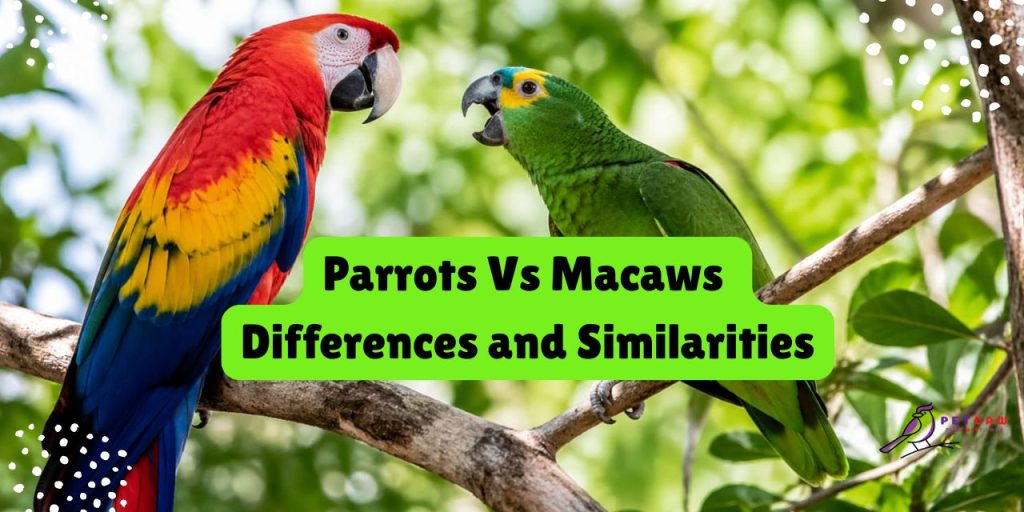
Introduction: Understanding the Real Difference Between Macaws and Parrots
When comparing Macaws vs. Parrots, many people assume they are two completely different birds. In reality, a Macaw is a type of parrot belonging to the order Psittaciformes. However, Macaws stand apart because of their massive size, long tails, powerful beaks, vivid coloration, and demanding care requirements.
Whether you are researching exotic birds, considering bird ownership, studying avian biology, or simply curious about rainforest wildlife, understanding the distinction between parrots and macaws matters. These birds are among the most intelligent and socially complex species on Earth, with advanced communication skills, emotional intelligence, and remarkable adaptability.
This guide explains everything you need to know about Macaw vs Parrot differences, including taxonomy, lifespan, diet, behavior, intelligence, conservation, costs, and suitability as pets.
Macaw vs. Parrot: Quick Comparison Table
| Feature | Macaws | General Parrots |
|---|---|---|
| Classification | Tribe Arini | Order Psittaciformes |
| Average Size | 30–40 inches | 3–25 inches |
| Tail Shape | Long and tapering | Short, square, or varied |
| Facial Skin | Bare facial patches | Fully feathered face |
| Beak Strength | Extremely powerful | Moderate to strong |
| Lifespan | 40–60+ years | 10–80 years |
| Noise Level | Very loud | Species dependent |
| Diet | High-fat nuts and fruits | Seeds, nectar, fruits, pellets |
| Space Requirements | Large aviary or room | Moderate to small cages |
| Best For | Experienced bird owners | Beginners to advanced owners |
What Is a Parrot?
A parrot is any bird belonging to the order Psittaciformes, which includes over 400 species worldwide. This group contains:
- Macaws
- Cockatoos
- African Greys
- Budgies
- Conures
- Amazons
- Lovebirds
- Eclectus parrots
Parrots are known for:
- Curved hooked beaks
- Strong climbing feet
- High intelligence
- Vocal mimicry
- Social flock behavior
- Long lifespans
Most parrots possess zygodactyl feet, meaning two toes point forward and two backward. This gives them exceptional climbing and grasping ability.
What Is a Macaw?
A Macaw is a large parrot species primarily native to Central and South America. Most belong to the tribe Arini and are famous for their:
- Long colorful tails
- Massive hooked beaks
- Bare white facial patches
- Exceptional intelligence
- Strong emotional bonding
Popular macaw species include:
- Blue-and-Gold Macaw
- Scarlet Macaw
- Green-Winged Macaw
- Hyacinth Macaw
- Military Macaw
Macaws are among the largest flying parrots in the world.
Taxonomic Reality: Is a Macaw Actually a Parrot?
Yes — all macaws are parrots, but not all parrots are macaws.
Think of parrots as the broader category and macaws as one specialized branch within that family tree.
Scientific Classification
| Taxonomic Rank | Macaws | Parrots |
|---|---|---|
| Order | Psittaciformes | Psittaciformes |
| Family | Psittacidae | Multiple families |
| Tribe | Arini | Various tribes |
This distinction is important because many care requirements, behaviors, and ecological roles differ dramatically between species.
Physical Differences Between Macaws and Other Parrots
1. Size Difference
One of the biggest differences is body size.
Macaws
- Usually 30–40 inches long
- Large wingspans
- Heavy body structure
Other Parrots
- Can range from tiny parrotlets to medium-sized Amazons
- Often lighter and easier to handle
The Hyacinth Macaw can weigh over 3 pounds, making it the world’s largest flying parrot species.
2. Tail Shape
Macaws have unmistakable long, tapered tails used for balance and flight maneuverability in dense rainforest canopies.
Most smaller parrots have:
- Short tails
- Square tails
- Rounded tails
The elongated macaw tail acts almost like a rudder during high-speed flight.
3. Facial Skin Patches
Macaws are famous for their:
- Bare white facial skin
- Fine feather lines around the eyes
These patches are unique identifiers, almost like fingerprints.
Most parrots have fully feathered faces.
4. Beak Strength
Macaws possess some of the strongest beaks among birds.
Their beaks can crack:
- Brazil nuts
- Palm nuts
- Hard tropical seeds
This adaptation allows them to access food sources unavailable to many other parrots.
Macaw vs. Parrot Intelligence
Are Macaws Smarter Than Other Parrots?
Not always.
While macaws are highly intelligent, some species — especially African Grey parrots — outperform them in:
- Vocabulary learning
- Contextual speech
- Problem-solving
- Object recognition
Cognitive Abilities Shared by Both
Both macaws and parrots demonstrate:
- Tool use
- Emotional attachment
- Memory retention
- Pattern recognition
- Social learning
- Mimicry
Researchers often compare parrot cognition to that of young human children.

Emotional and Social Behavior
Macaws: The “Velcro Birds”
Macaws are extremely dependent on social interaction.
Without enough stimulation, they may develop:
- Feather plucking
- Screaming
- Aggression
- Depression
- Self-harming behavior
They form intense pair bonds and often attach strongly to one human.
Smaller Parrots
Some smaller parrots are:
- More independent
- Easier to entertain
- Better suited to apartment living
However, all parrots require:
- Daily enrichment
- Mental stimulation
- Social interaction
Ignoring these needs often causes behavioral problems.
Lifespan Comparison
How Long Do Macaws Live ?
| Species | Average Lifespan |
|---|---|
| Macaws | 40–60+ years |
| Budgies | 8–15 years |
| Cockatiels | 15–25 years |
| African Greys | 40–60 years |
| Cockatoos | 50–80 years |
Owning a macaw is often a lifelong commitment that may extend across generations. Know more about macaws lifespan
Diet and Nutrition Differences
What Do Macaws Eat?
Wild macaws consume:
- Palm nuts
- Fruits
- Seeds
- Flowers
- Clay from riverbanks
The clay helps neutralize natural toxins from rainforest seeds.
Captive Macaw Diet
A healthy macaw diet includes:
- High-quality pellets
- Fresh vegetables
- Limited fruit
- Healthy nuts
- Calcium sources
Macaws require more dietary fat than many smaller parrots.
Common Nutrition Problems
Poor diets can lead to:
- Obesity
- Fatty liver disease
- Vitamin deficiencies
- Beak deformities
- Weak feathers
Seed-only diets are one of the biggest causes of health problems in captive parrots.
Housing and Space Requirements
Macaws Need Massive Space
A macaw cannot thrive in a tiny cage.
Ideal housing includes:
- Walk-in aviaries
- Dedicated bird rooms
- Large flight cages
- Daily flying opportunities
Their wingspan alone can exceed 40 inches.
Smaller Parrots Are More Flexible
Species like:
- Budgies
- Cockatiels
- Green-cheek conures
can adapt more easily to apartment environments.
Still, they require:
- Daily exercise
- Toys
- Climbing opportunities
- Out-of-cage time
Noise Levels: Which Bird Is Louder?
Macaws are among the loudest pet birds in the world.
Their calls evolved to travel across dense rainforests over long distances.
Noise Comparison
| Bird Type | Noise Level |
|---|---|
| Macaw | Extremely loud |
| Cockatoo | Very loud |
| African Grey | Moderate |
| Budgie | Relatively quiet |
Macaws are generally unsuitable for apartments or noise-sensitive homes.
Cost of Owning a Macaw vs. Other Parrots
Initial Purchase Costs
| Bird | Average Cost |
|---|---|
| Budgie | $25–$100 |
| Cockatiel | $100–$300 |
| African Grey | $2,000–$5,000 |
| Macaw | $1,500–$5,000+ |
Lifetime Costs
Macaws can exceed $50,000 in lifetime expenses due to:
- Veterinary care
- Specialized diets
- Toys
- Cage replacements
- Property damage
Large parrots destroy toys rapidly and require constant enrichment.
Common Behavioral Problems in Macaws and Parrots
Why Behavioral Problems Happen
Most issues result from:
- Isolation
- Boredom
- Poor diet
- Lack of training
- Small cages
- Sleep deprivation
Common Problems
Macaws
- Excessive screaming
- Destructive chewing
- Territorial aggression
- Attachment disorders
Smaller Parrots
- Biting
- Hormonal aggression
- Anxiety
- Feather plucking
How to Prevent Behavioral Issues
Step-by-Step Prevention Guide
1. Provide Daily Mental Enrichment
Use:
- Puzzle toys
- Foraging activities
- Training sessions
2. Maintain Proper Nutrition
Avoid:
- Seed-only diets
- Sugary treats
- Excessive processed foods
3. Encourage Exercise
Allow:
- Climbing
- Flying
- Supervised exploration
4. Respect Sleep Cycles
Parrots need 10–12 hours of darkness daily.
5. Socialize Properly
Birds isolated for long periods often become psychologically distressed.
Conservation Status and Threats
Why Wild Macaws Are Endangered
Major threats include:
- Deforestation
- Illegal pet trade
- Habitat fragmentation
- Climate change
Several macaw species are critically endangered.
Amazon Basin and Clay Licks
In areas like Puerto Maldonado, Peru, macaws gather at clay licks called collpas.
Scientists believe the clay:
- Neutralizes toxins
- Provides minerals
- Supports digestion
Ecotourism around these clay licks now helps fund rainforest conservation.
Which Bird Is Better for Beginners?
Best for Beginners
- Budgies
- Cockatiels
- Green-cheek conures
Best for Experienced Owners
- Macaws
- Cockatoos
- African Greys
Macaws require:
- Extensive training
- Significant space
- Financial stability
- Long-term commitment
They are not ideal impulse pets.
Ethical Adoption and Bird Rescue
Many parrots outlive their owners.
Before purchasing:
- Check bird rescues
- Research breeders carefully
- Avoid illegally imported birds
Ethical adoption helps reduce pressure on wild populations.
Macaw vs. Parrot: Final Verdict
The difference between a macaw and a parrot comes down to specialization.
Macaws are:
- Larger
- Louder
- More demanding
- More expensive
- More emotionally intense
General parrots offer a wider range of:
- Sizes
- Temperaments
- Lifespans
- Care requirements
The best bird is not necessarily the most beautiful — it is the species that fits your:
- Lifestyle
- Budget
- Space
- Time commitment
- Experience level
Frequently Asked Questions
What is the main difference between a macaw and a parrot?
A macaw is a specific type of large parrot known for long tails, bare facial patches, and powerful beaks, while “parrot” refers to hundreds of bird species in the order Psittaciformes.
Are macaws more aggressive than other parrots?
Not usually. Macaws are often gentle and affectionate, though their size makes bites more serious. Smaller parrots can sometimes display stronger territorial behavior.
Can macaws talk like parrots?
Yes. Macaws can mimic speech and sounds, although African Grey parrots are generally considered superior talkers.
How long do macaws live in captivity?
Most macaws live between 40 and 60 years with proper care, nutrition, and veterinary attention.
Why do macaws eat clay?
Wild macaws consume clay to neutralize toxins from seeds and gain important minerals.
Are macaws good apartment pets?
No. Their loud vocalizations and large space requirements make them unsuitable for most apartment settings.
What is the cheapest parrot to own?
Budgies are generally the most affordable parrots in terms of purchase price and upkeep.
About The Author


