
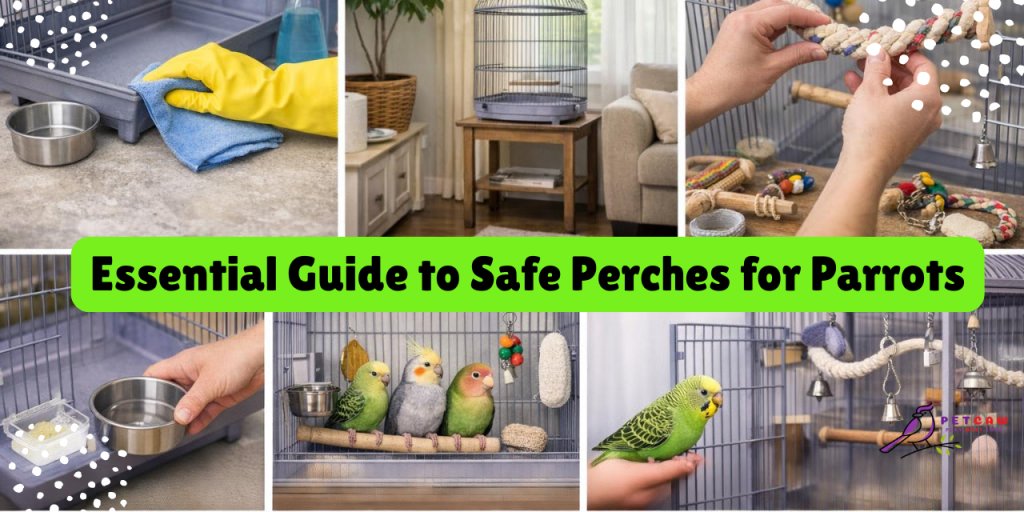
Do you want to know the secret to a happy, long-lived parrot? It starts with avian biomechanics, not just nutrition. Most owners overlook their bird’s habitat ergonomics, leading to pododermatitis (bumblefoot)—a painful, $500 vet visit. In this guide, I’ll show you how to master environmental enrichment by choosing the right variable diameter perches. We’ll cover the 2/3 grip rule, the safety of Manzanita vs. Sisal rope, and how to prevent muscle atrophy in species from Budgies to Macaws. this is your blueprint for a healthier, more active feathered friend. Let’s dive in!
Why Your Parrot’s Perch is the Most Important Investment in Their Cage
Think of perches as your parrot’s “shoes.” For Psittacines, perches are the foundation of avian biomechanics. If the grip is always the same, you are looking at a medical disaster.
A poor choice leads to:
- Pododermatitis (Bumblefoot): Severe pressure sores that can become life-threatening.
- Muscle Atrophy: A lack of proprioceptive stimulation causes foot muscles to weaken.
- Arthritis: A major concern in senior birds and large species like Macaws or Cockatoos.
5 Key Benefits of Perch Variety: More Than Just a Place to Stand
Here is why an enrichment-driven habitat requires variety:
- Physical Exercise: Variable diameter surfaces force the foot to flex and stretch, improving circulation.
- Beak Maintenance: Rougher natural barks (like Cholla or Java wood) act as organic nail files and aid in mandibular health.
- Mental Stimulation: Exploring new textures prevents boredom and stress-related feather plucking.
- Temperature Regulation: Varied materials, like heat-retaining thermo-perches vs. cool natural hardwoods, help birds manage body heat.
- Sleep Quality: Soft Sisal or flat platform perches allow for deep-REM rest without muscle strain.
Comparing Perch Materials: From Natural Wood to Safety Concerns
In the world of avian husbandry, not all materials are created equal.
| Material | Best For… | Safety Rating | Pro Tip |
| Sustainable Hardwood | Everyday use | ⭐⭐⭐⭐⭐ | Use Manzanita or Dragonwood for maximum durability. |
| Cotton/Sisal Rope | Comfort/Sleep | ⭐⭐⭐ | Watch for fiber impaction; birds can ingest loose threads. |
| Sanded/Mineral | Nail Filing | ⭐⭐⭐ | Use Sanded Quartz sparingly; never as the primary roost. |
| Edible/Calcium | Nutrition | ⭐⭐⭐⭐ | Great for calcium bioavailability and bee pollen supplementation. |
Safety Warning: Avoid “Sanded Perch Covers.” They act like sandpaper on sensitive foot pads and are the leading cause of pododermatitis in captive birds.
The 2/3 Rule: Finding the Perfect Perch Diameter for Your Species
How do you know if a perch fits? You must calculate the grip wrap percentage.
The Rule: Your parrot’s foot should wrap around approximately two-thirds (60-70%) of the perch. Their front and back claws should not meet or overlap.
- Small (Budgies/Parrotlets): 0.5″ to 0.75″ diameter.
- Medium (Conures/Cockatiels): 0.75″ to 1.5″ diameter.
- Large (African Greys/Amazons): 1.5″ to 2.5″ diameter.
- Extra Large (Macaws/Cockatoos): 2.5″ to 4″ diameter.
Strategic Perch Placement: Creating an “Avian Highway” for Maximum Activity
Ranking on Google in 2026 requires “Utility.” Don’t just toss perches in; map out a horizontal flight path:
- The Sleeping Zone: Place a comfortable roosting spot at the highest point of the cage.
- The Feeding Station: Use a sturdy Java wood perch near foraging zones and food bowls.
- The “Highway”: Create a staggered path to encourage climbing—this is vital for species-specific ergonomics.
- The Visibility Gap: Offset perches to avoid the “Dropping Zone.” This keeps the lower habitat sanitary.

The Hidden Dangers of Traditional Dowel Perches (And What to Use Instead)
Most cages come with smooth, uniform dowel perches. Throw them away. Uniform diameters are the #1 cause of pressure sores. Replace them with pedicure perches or natural branches that offer variable diameters along the length to ensure constant foot exercise.
Maintenance 101: How to Clean and When to Replace Your Parrot’s Perches
To stay high in search results, we provide an actionable sanitation protocol:
- Daily: Spot clean droppings to maintain habitat hygiene.
- Weekly: Deep clean with F10 disinfectant compatibility or a 50/50 vinegar solution.
- Monthly: Inspect for toxic wood decay, cracks, or frayed Sisal fibers.
- Replacement: If the bark is stripped or the rope is frayed, replace it to prevent injury.
Top-Rated Perch Accessories: Stands, Play Gyms, and Window Perches
Your bird’s life shouldn’t be limited to the cage. Expand their avian world:
- Tabletop Stands: Essential for positive reinforcement training.
- Window Perches: Provide mental stimulation via “Bird TV” using suction-cup PVC shower perches.
- Manzanita Play Gyms: The gold standard for out-of-cage enrichment.
Expert Consensus: Common Questions About Avian Foot Health (FAQ)
1-Can I use branches from my backyard for bird perches?
Yes, but identify the wood species first. Only use non-toxic woods (Apple, Ash, Elm). Avoid toxic species like Azalea or Cherry. Bake at 200°F to ensure they are free of parasites.
2-How many perches should be in a parrot cage?
A minimum of three. You need a mix of textures and sizes to fulfill different behavioral needs (roosting, playing, eating).
3-What are the best perches for senior parrots with arthritis?
Flat platform perches. These reduce the need for a constant grip and provide a stable surface for aging joints.
The Bottom Line: Your Checklist for a Healthy Parrot Habitat
If you want to maximize your bird’s health
Diversity is King: Combine natural hardwood, rope, and calcium perches.
- Natural is Better: Mimic the irregular branches found in the wild.
- Safety First: Audit your cage weekly for wear and tear.
Use our Bird Cage Size Calculator to choose best home for your feathered friend
About The Author


